Product Description
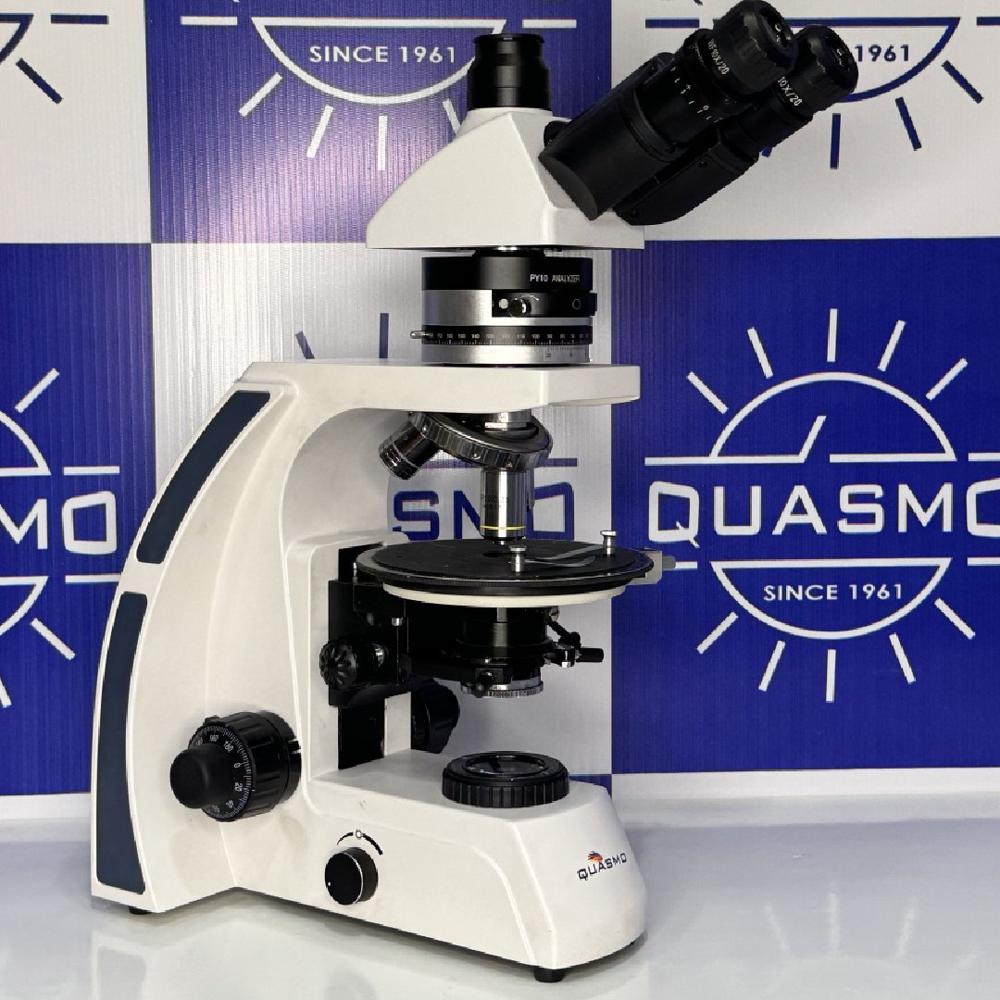
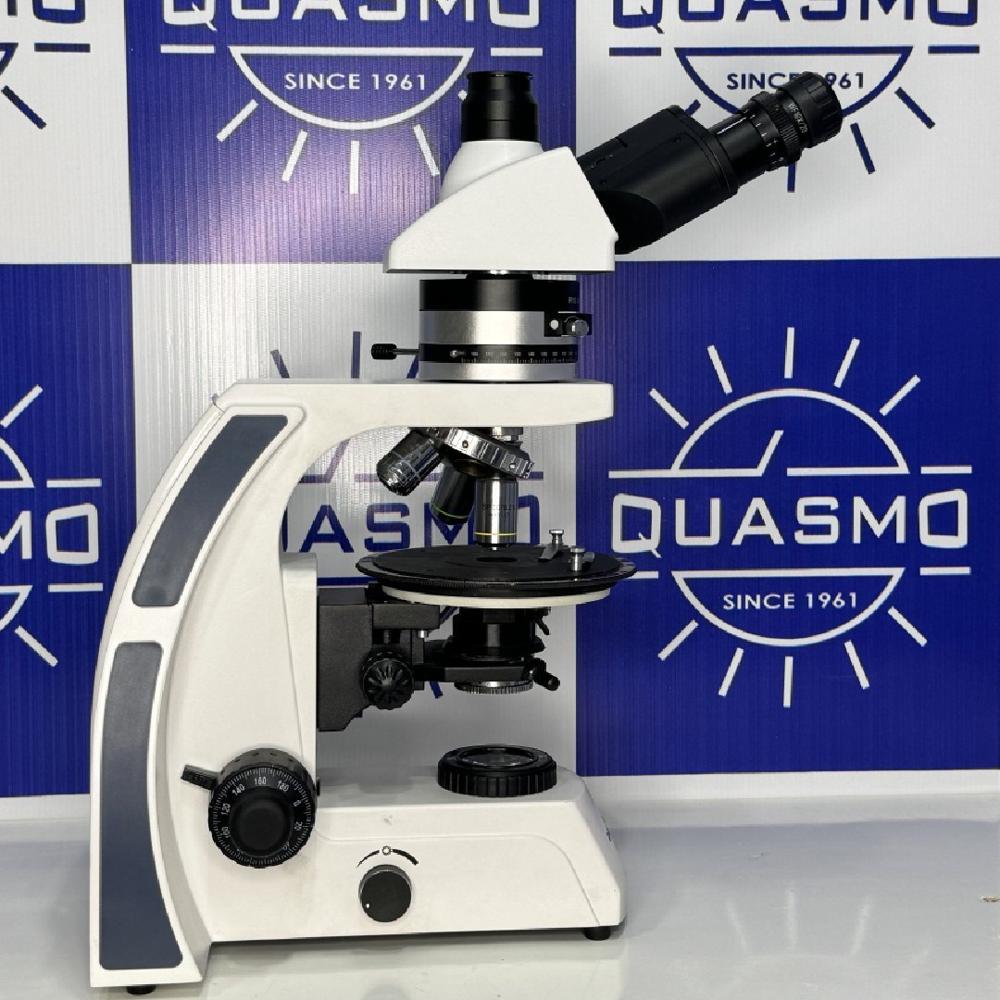
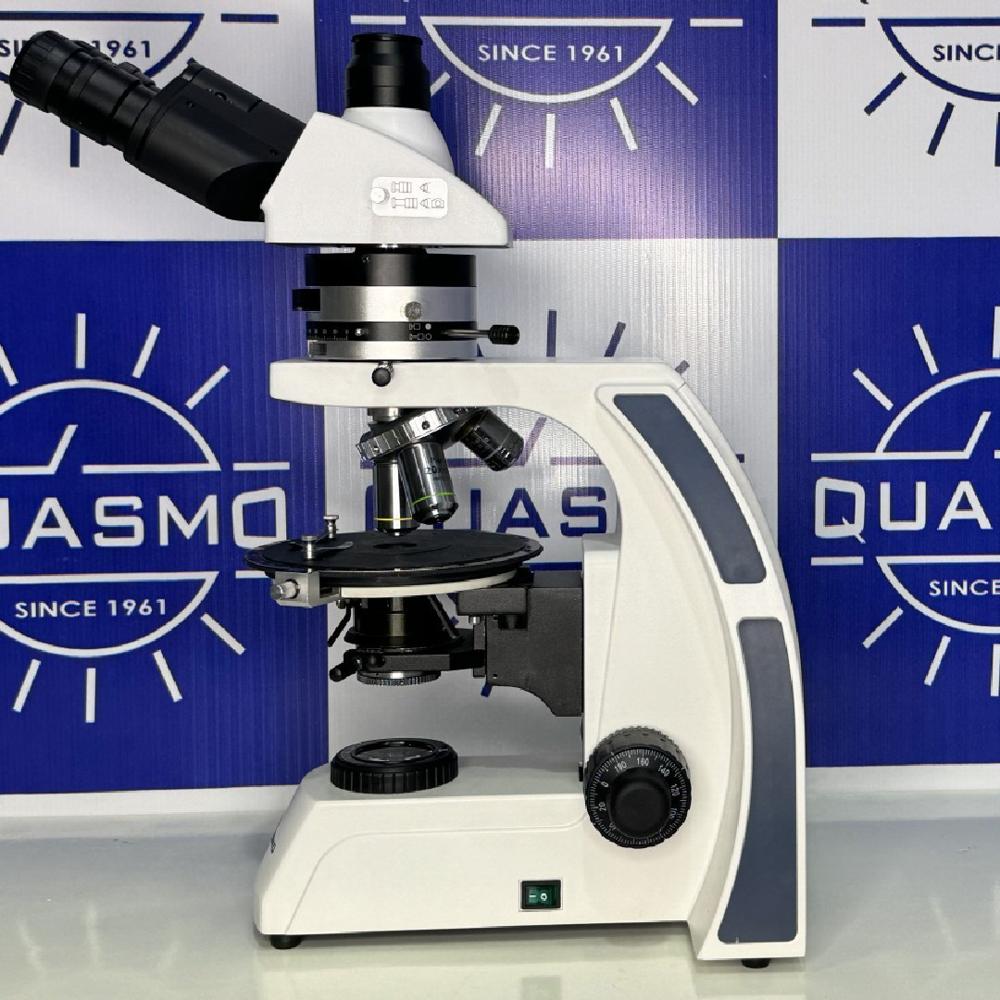
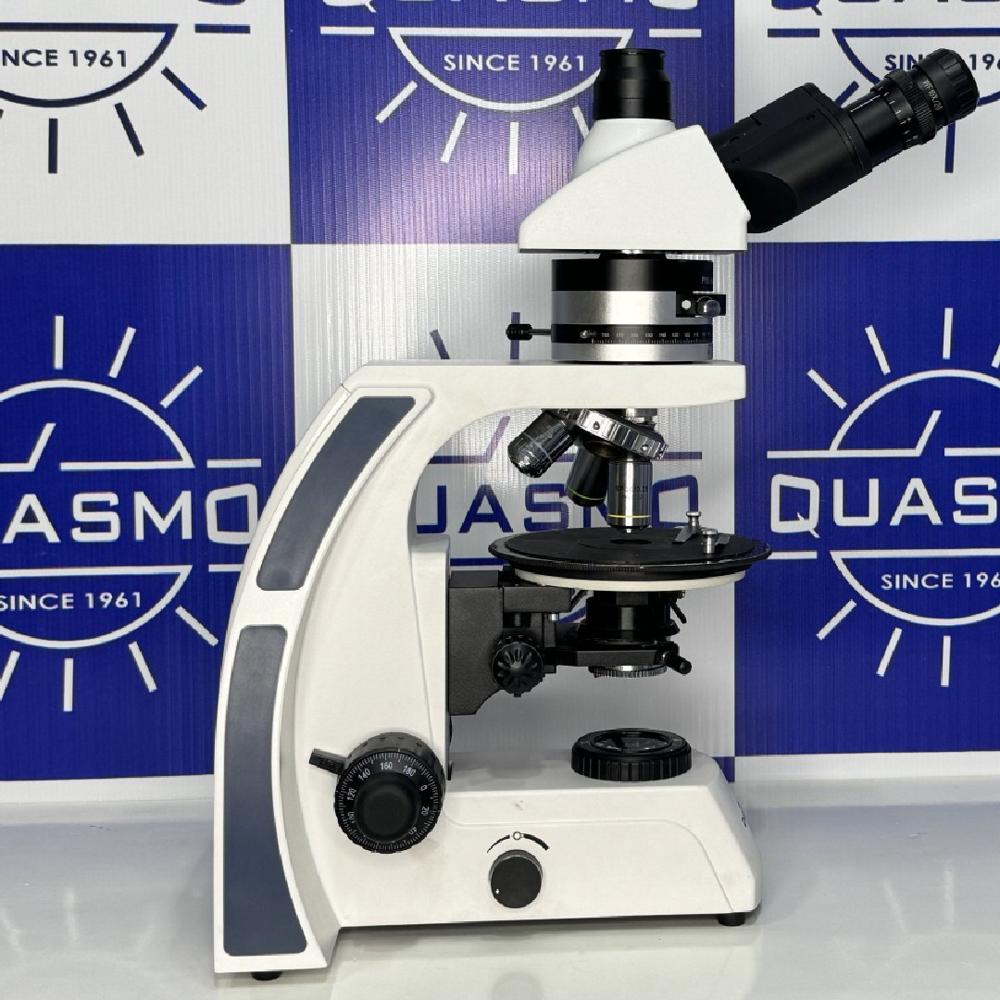
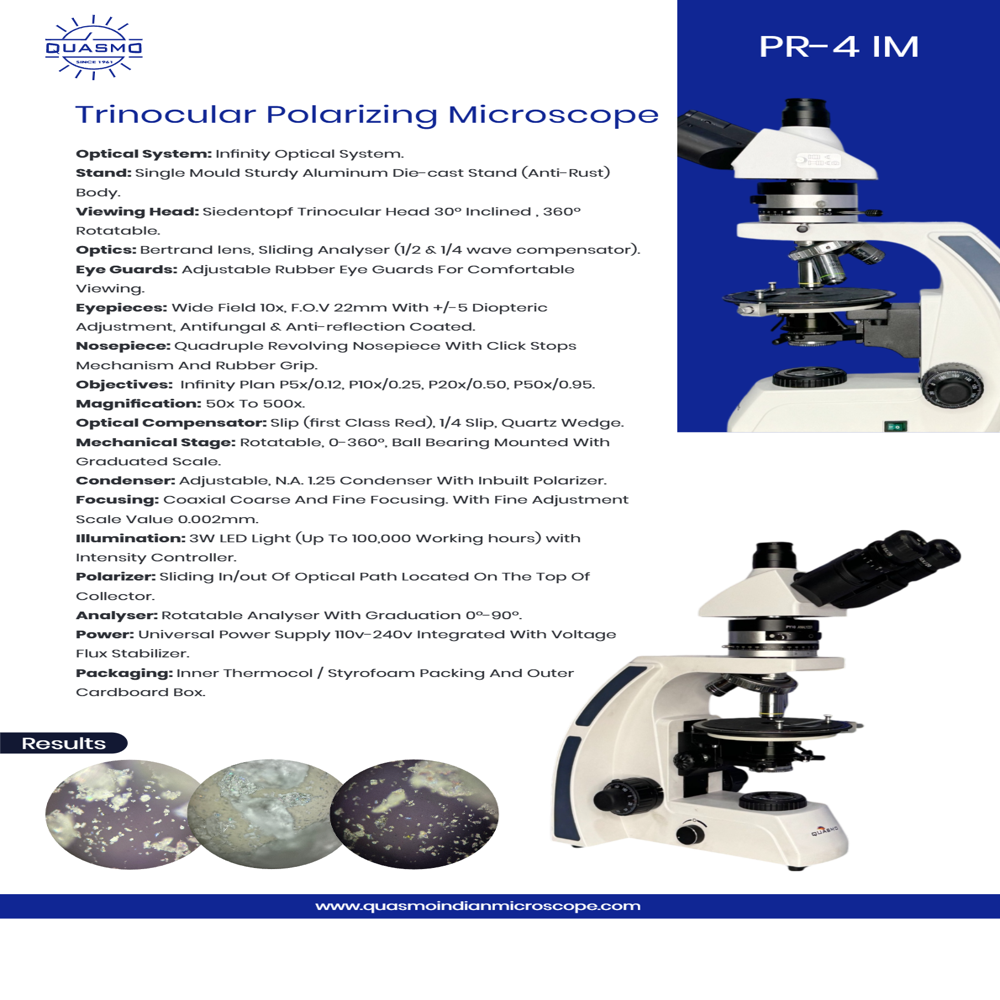
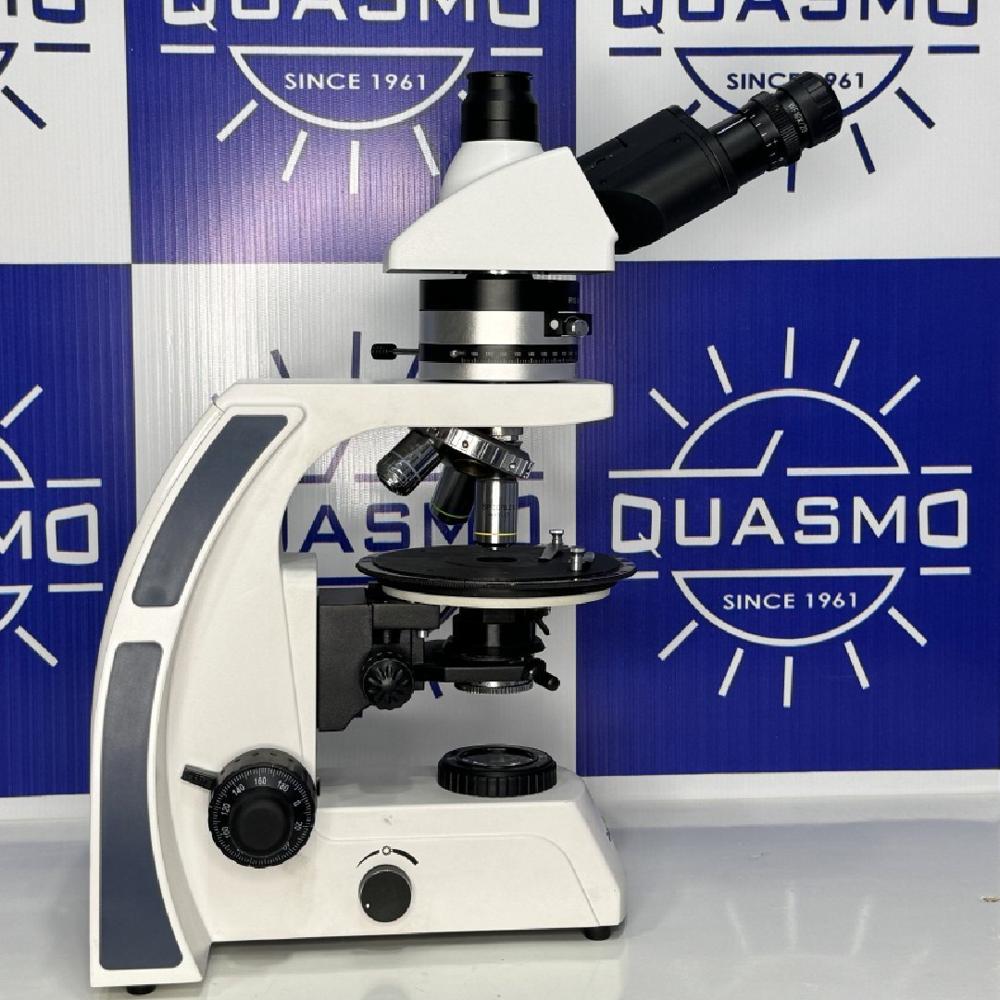
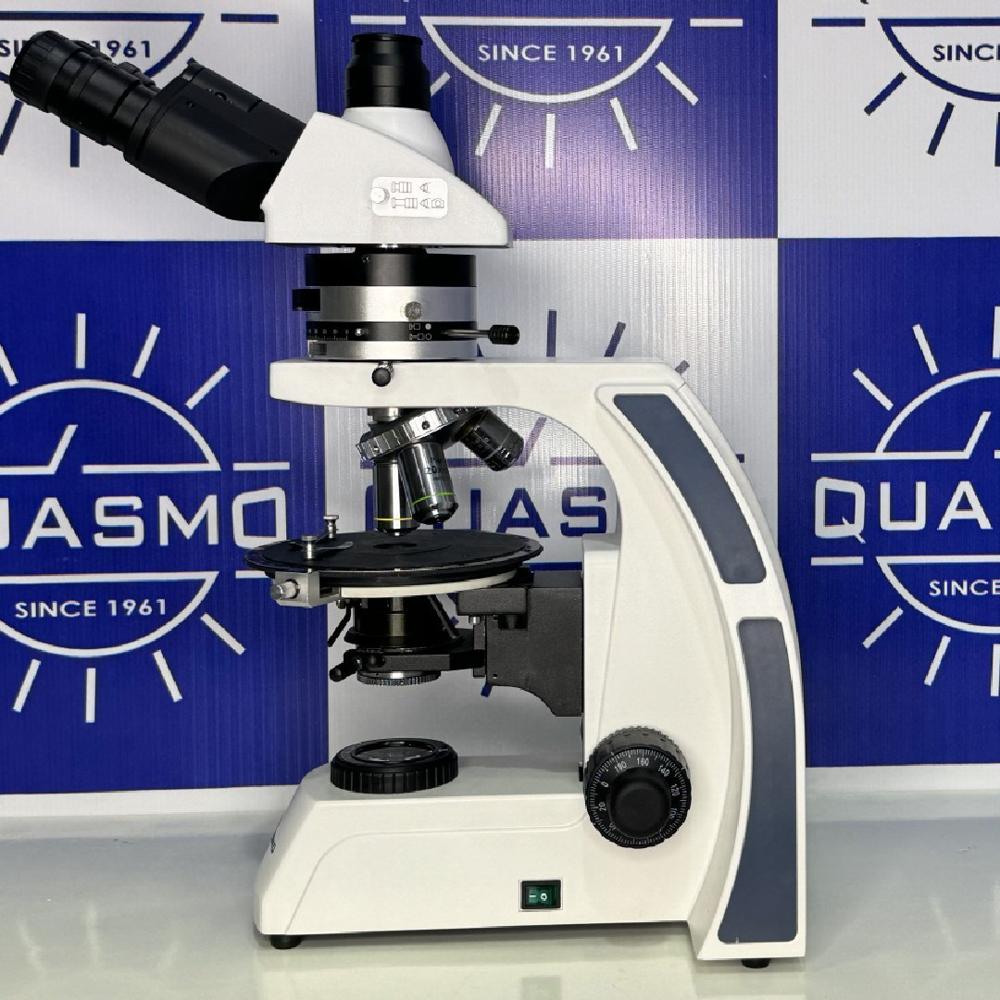
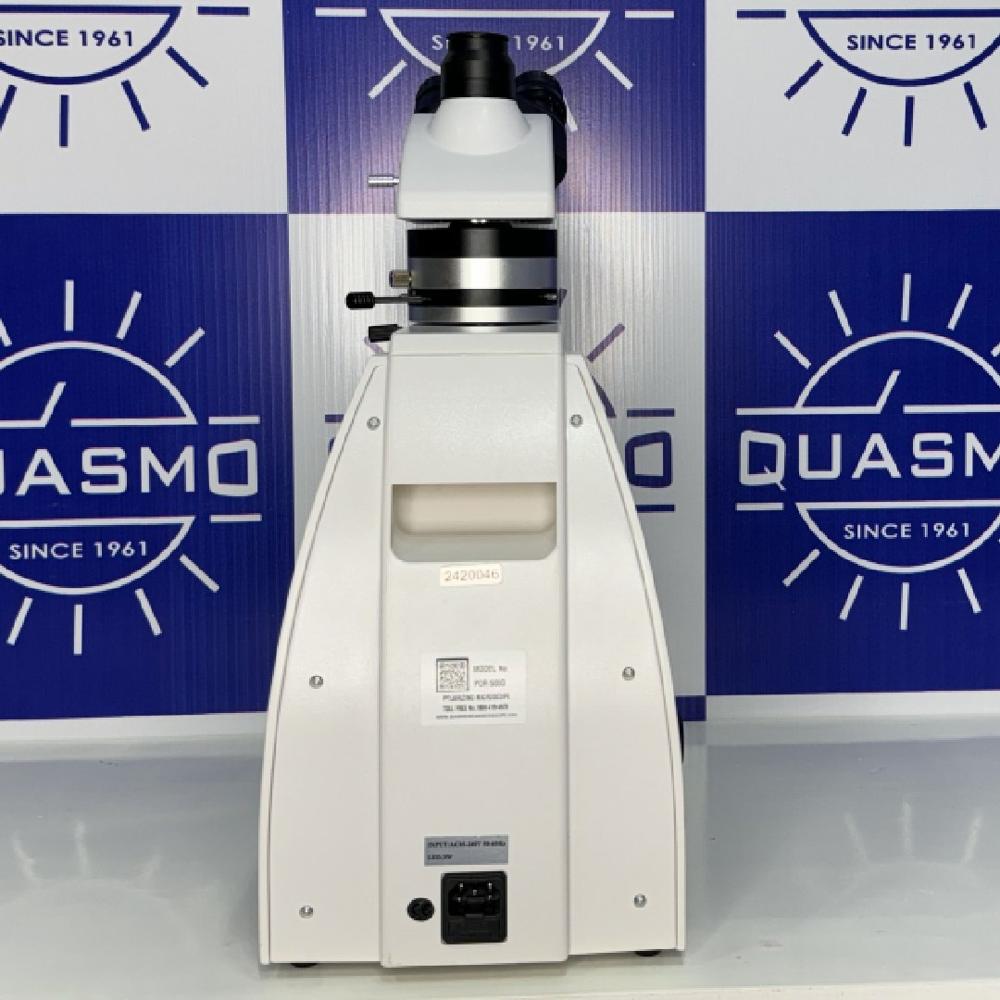
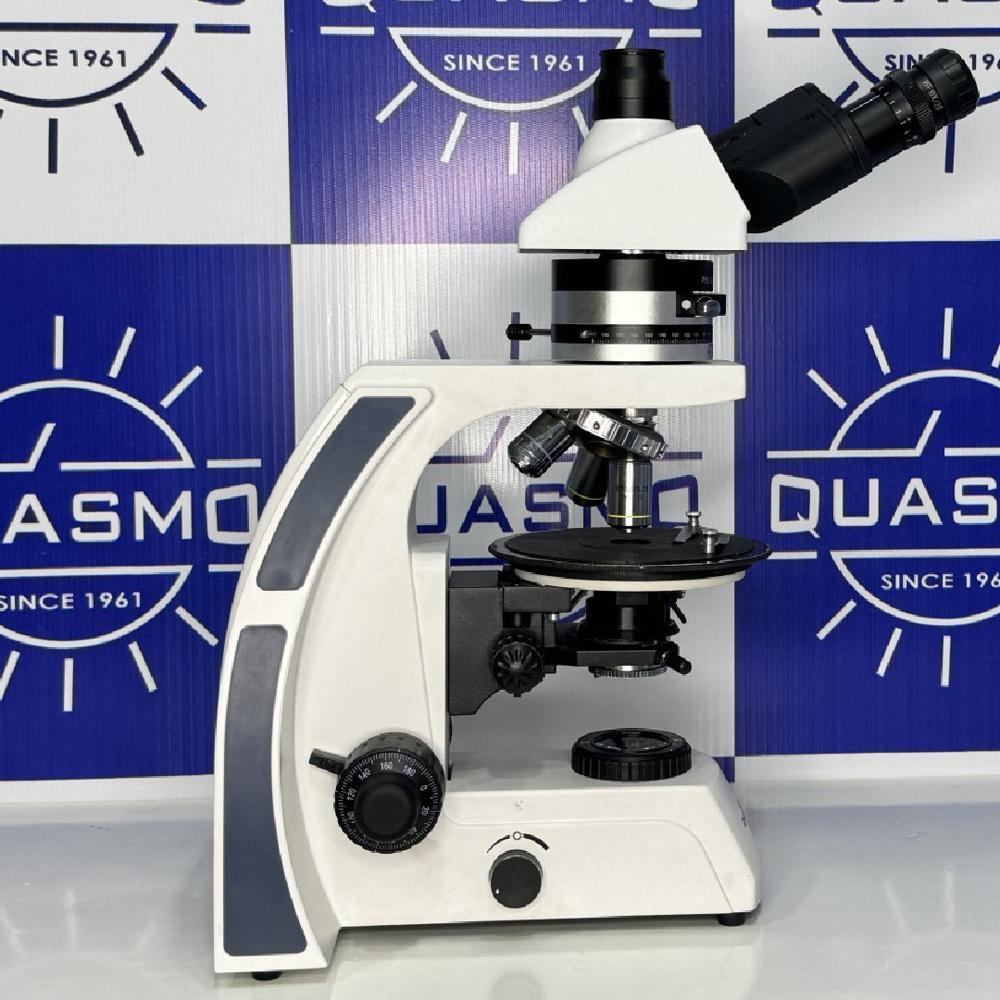
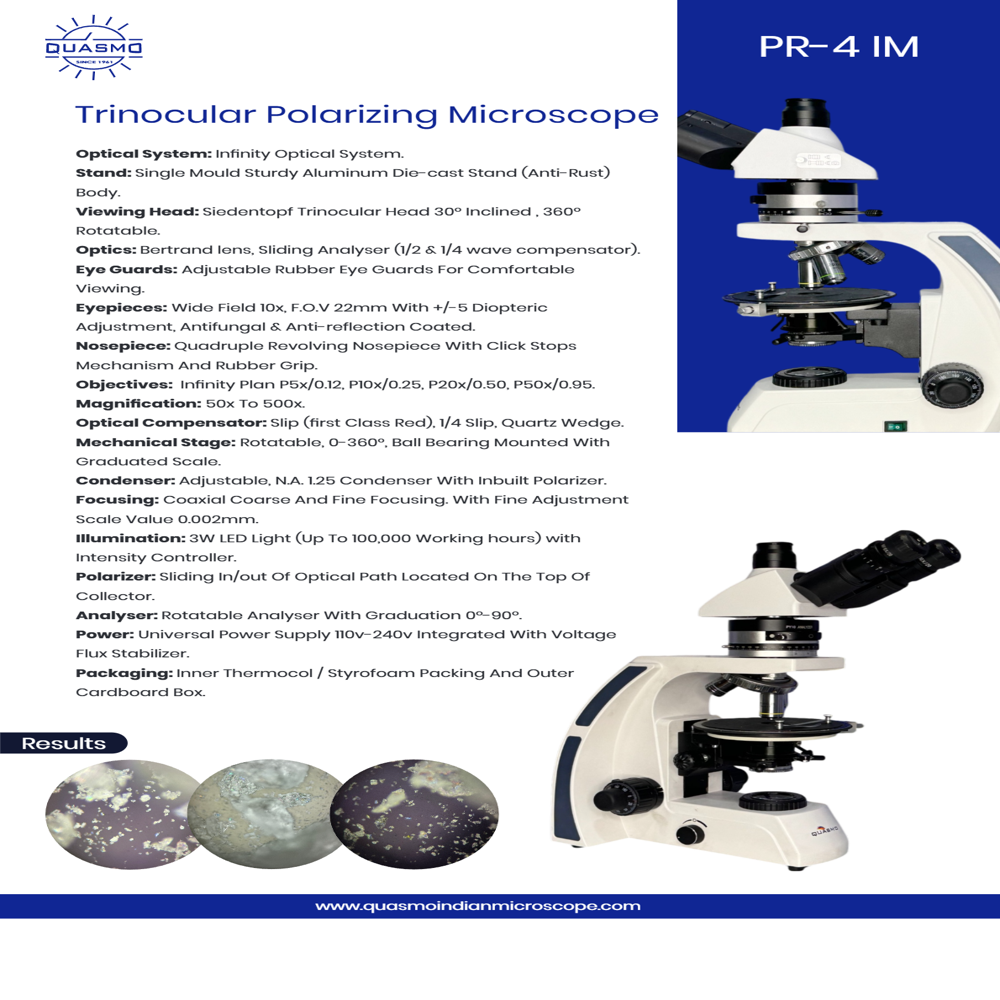
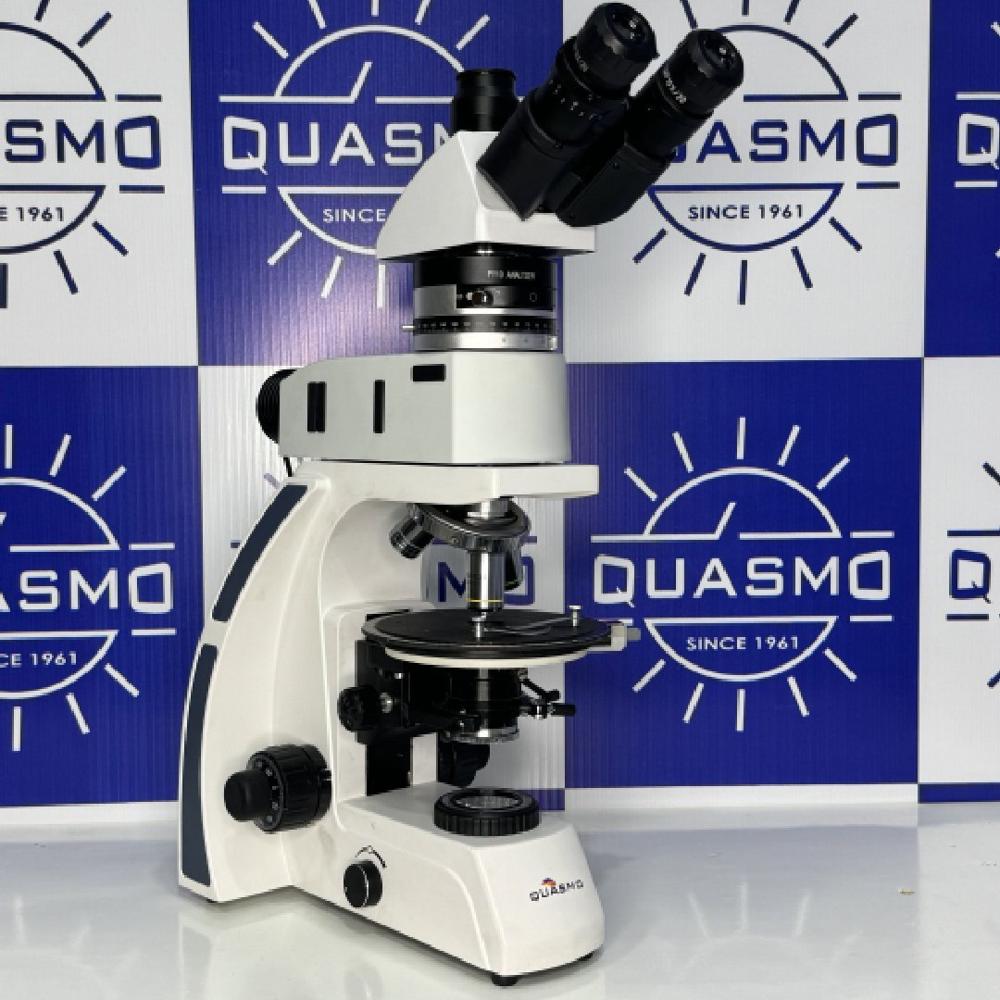
PR-4 IM Trinocular Polarizing Microscope
Optical System: Infinity Optical System.
Stand: Single Mould Sturdy Aluminum Die-cast Stand (Anti-Rust) Body.
Viewing Head: Siedentopf Trinocular Head 30 Inclined , 360 Rotatable.
Optics: Bertrand lens, Sliding Analyser (1/2 & 1/4 wave compensator).
Eye Guards: Adjustable Rubber Eye Guards For Comfortable Viewing.
Eyepieces: Wide Field 10x, F.O.V 22mm With +/-5 Diopteric Adjustment, Antifungal & Anti-reflection Coated.
Nosepiece: Quadruple Revolving Nosepiece With Click Stops Mechanism And Rubber Grip.
Objectives: Infinity Plan P5x/0.12, P10x/0.25, P20x/0.50, P50x/0.95
Magnification: 50x To 500x.
Optical Compensator: Slip (first Class Red), 1/4 Slip, Quartz Wedge.
Mechanical Stage: Rotatable, 0-360, Ball Bearing Mounted With Graduated Scale.
Condenser: Adjustable, N.A. 1.25 Condenser With Inbuilt Polarizer.
Focusing: Coaxial Coarse And Fine Focusing. With Fine Adjustment Scale Value 0.002mm.
Illumination: 3W LED Light (Up To 100,000 Working hours) with Intensity Controller.
Polarizer: Sliding In/out Of Optical Path Located On The Top Of Collector.
Analyser: Rotatable Analyser With Graduation 0-90.
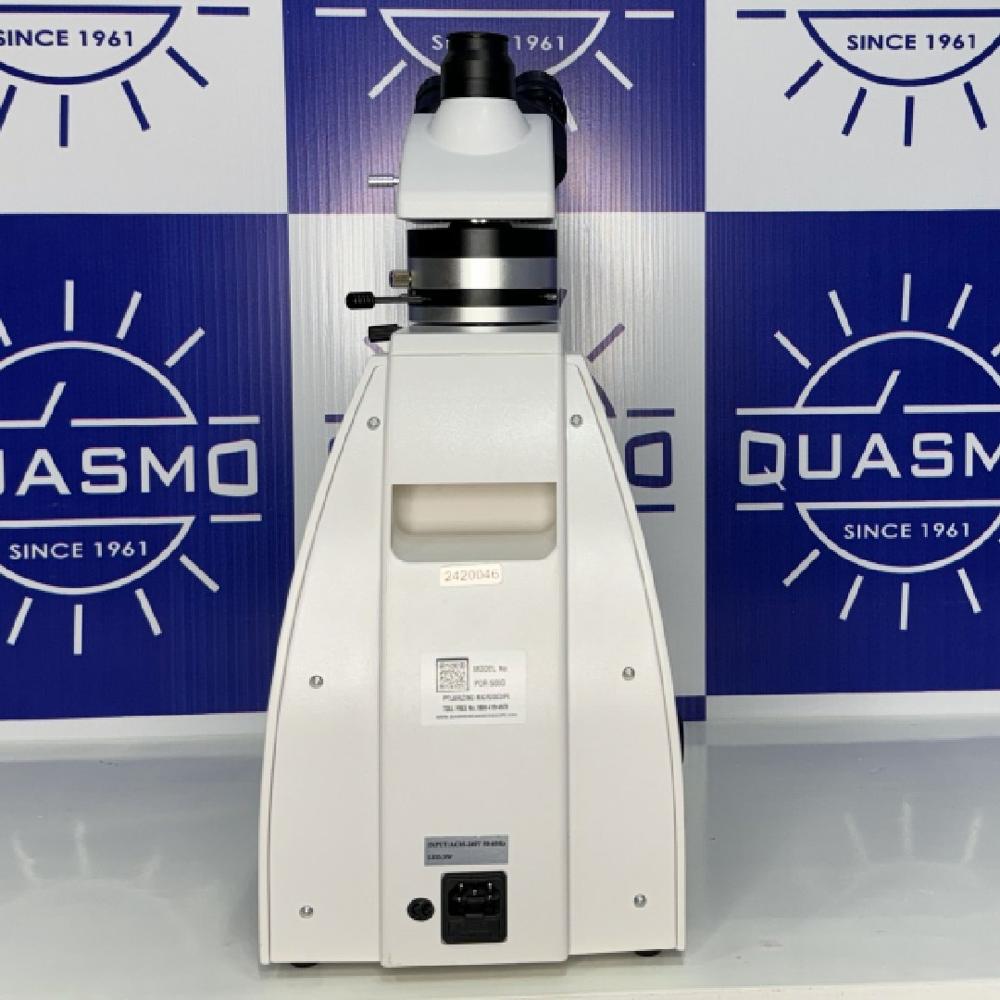
Power: Universal Power Supply 110v-240v Integrated With Voltage Flux Stabilizer.
Packaging: Inner Thermocol / Styrofoam Packing And Outer Cardboard Box.
Exceptional Optical Analysis for Geology & MineralogyDesigned for qualitative and quantitative polarizing analysis, the PR-4 IM microscope is optimized for professionals in geology, mineralogy, and crystallography. Its advanced features, such as a 360 rotatable analyzer, precision graduated stage, and strain-free optics, allow for comprehensive examination of birefringent samples. The smooth, lockable stage movement and heavy-duty build make extended sessions effortless and accurate.
Flexible Imaging & Illumination OptionsWith its trinocular port, this microscope offers easy integration with most external digital cameras, supporting still image and video capture for documentation or teaching purposes. The integral Koehler halogen illumination system, featuring adjustable brightness and a variable aperture diaphragm, ensures consistent and clear lighting for both orthoscopic and conoscopic viewing modes. High-resolution imaging depends on the attached camera and chosen optical components.
FAQs of PR-4 IM Trinocular Polarizing Microscope:
Q: How is the PR-4 IM Trinocular Polarizing Microscope set up for polarization studies?
A: The microscope features a 360 rotatable analyzer and a rotating polarizer mounted under the condenser. This configuration allows users to precisely align polarization angles for both qualitative and quantitative analysis, essential for examining optical properties of minerals and crystals.
Q: What types of samples or applications is this microscope best suited for?
A: The PR-4 IM is ideal for geology, mineralogy, petrology, and crystallography, as well as for advanced educational purposes. Its polarizing capabilities make it particularly suited for analyzing thin sections and optical properties of anisotropic materials.
Q: When should I use the Bertrand lens, and what is its benefit?
A: The Bertrand lens is used for conoscopic observation, enabling the analysis of optical interference figures in crystals. It is centerable and retractable, making it easy to switch between orthoscopic and conoscopic viewing as needed during mineral analysis.
Q: Where can I mount a camera for image capture, and what formats are supported?
A: A camera can be attached to the trinocular port, accommodating most standard digital microscope cameras. The image and video formats depend on the specifications of the chosen camera, as the microscope itself supports flexible digital documentation.
Q: What is the process for precise angle measurement with this microscope?
A: Precision angle measurements are achieved using the 140 mm rotating stage, which has clearly graduated vernier scales readable to 0.1. The stage rotates smoothly, locks in place, and the readings assist in analyzing specimen orientation accurately.
Q: How do variable illumination and focusing systems benefit my usage?
A: Adjustable Koehler illumination and a variable aperture diaphragm provide optimal light control for high-contrast, clear images. Coupled with fine and coarse coaxial focusing, you can easily obtain sharp, detailed views across a range of magnifications.
Q: What spare parts are available and how can they be obtained?
A: Spare halogen bulbs, fuses, eyepieces, and objectives are available separately to ensure continued microscope performance. These can be procured directly from the manufacturer, supplier, or authorized distributor.










 Send Inquiry