Product Description
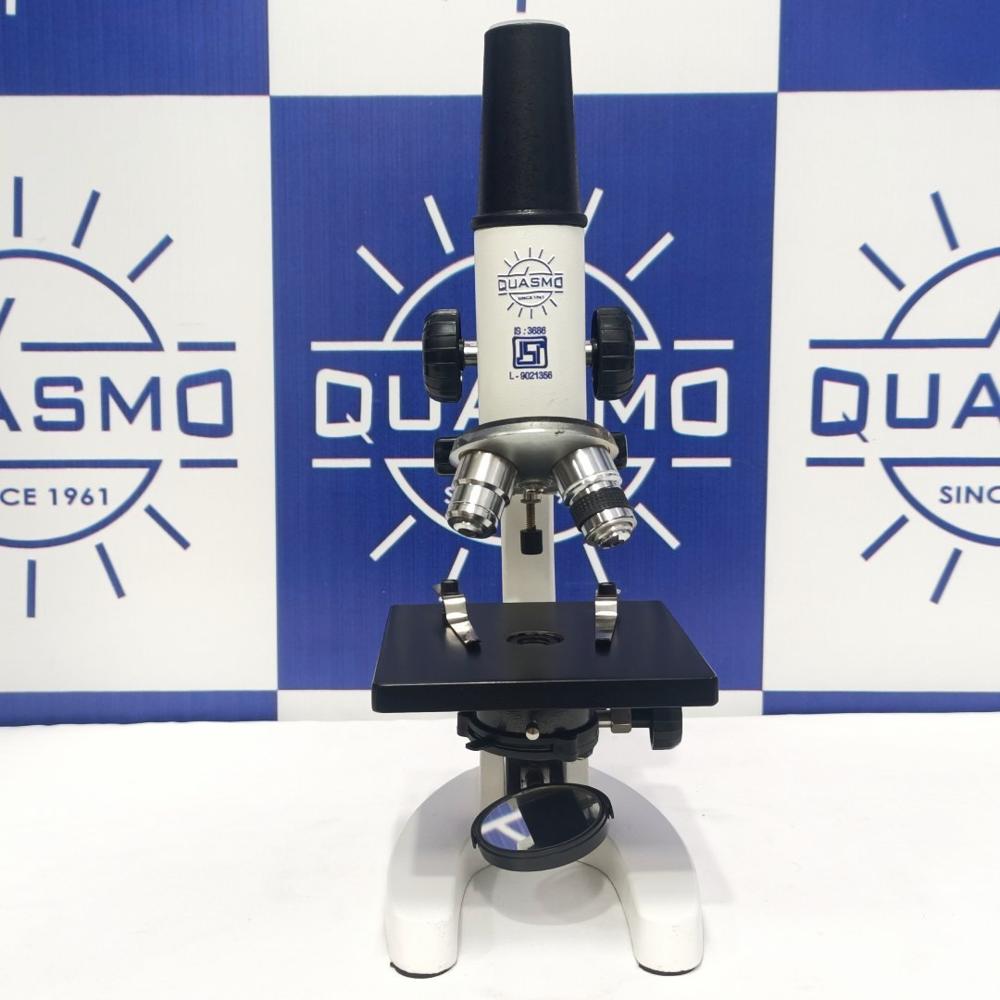
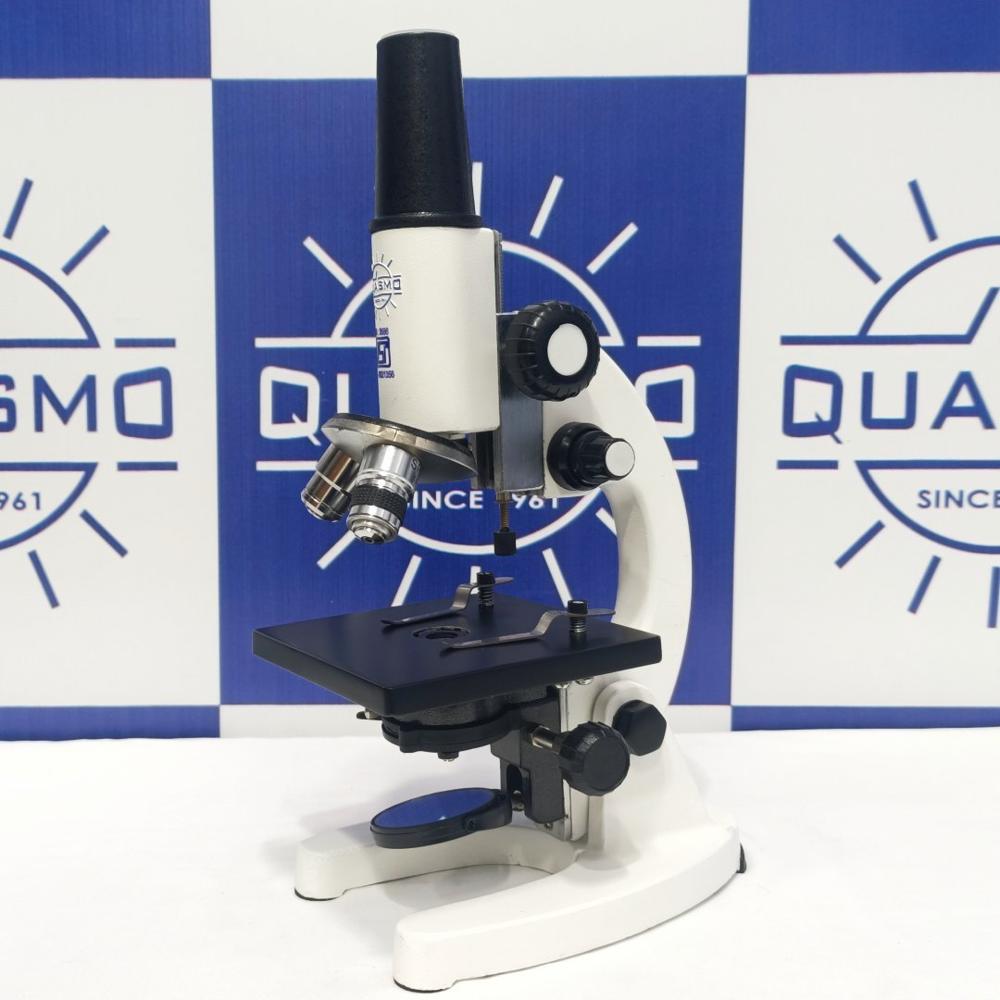
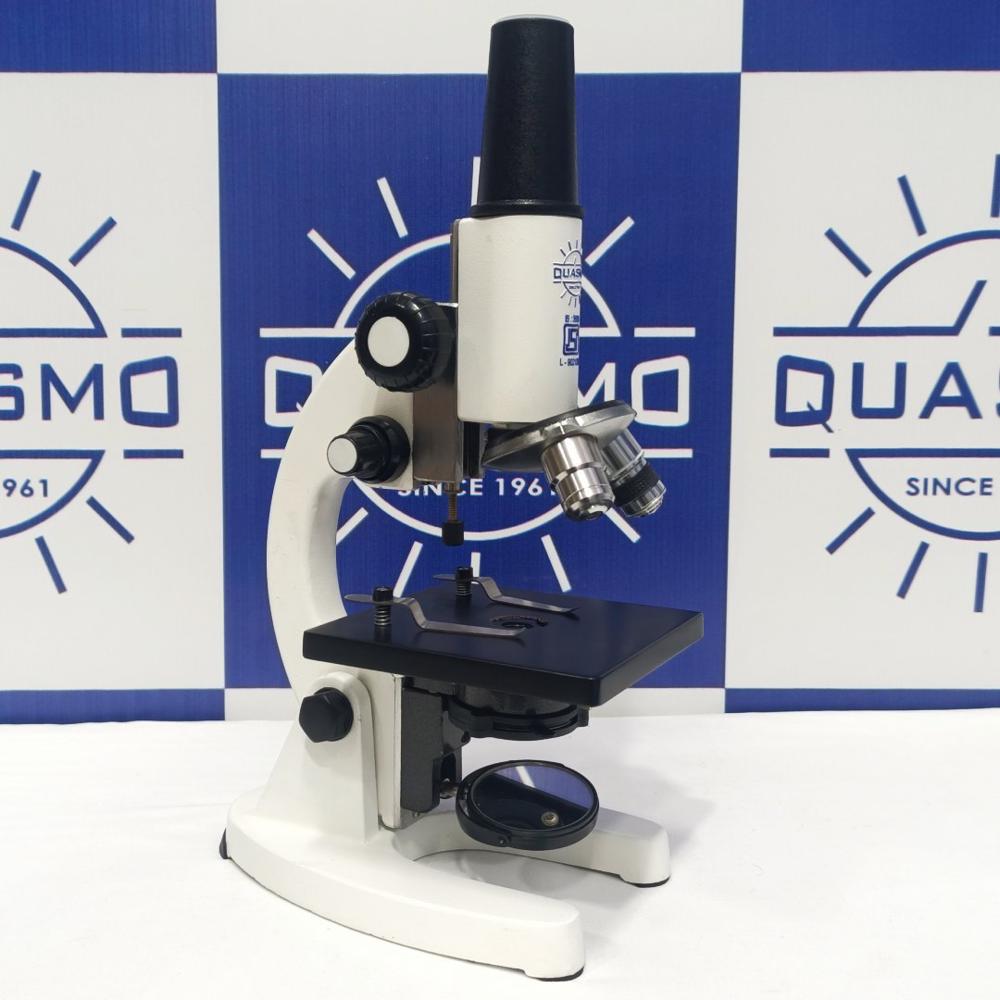
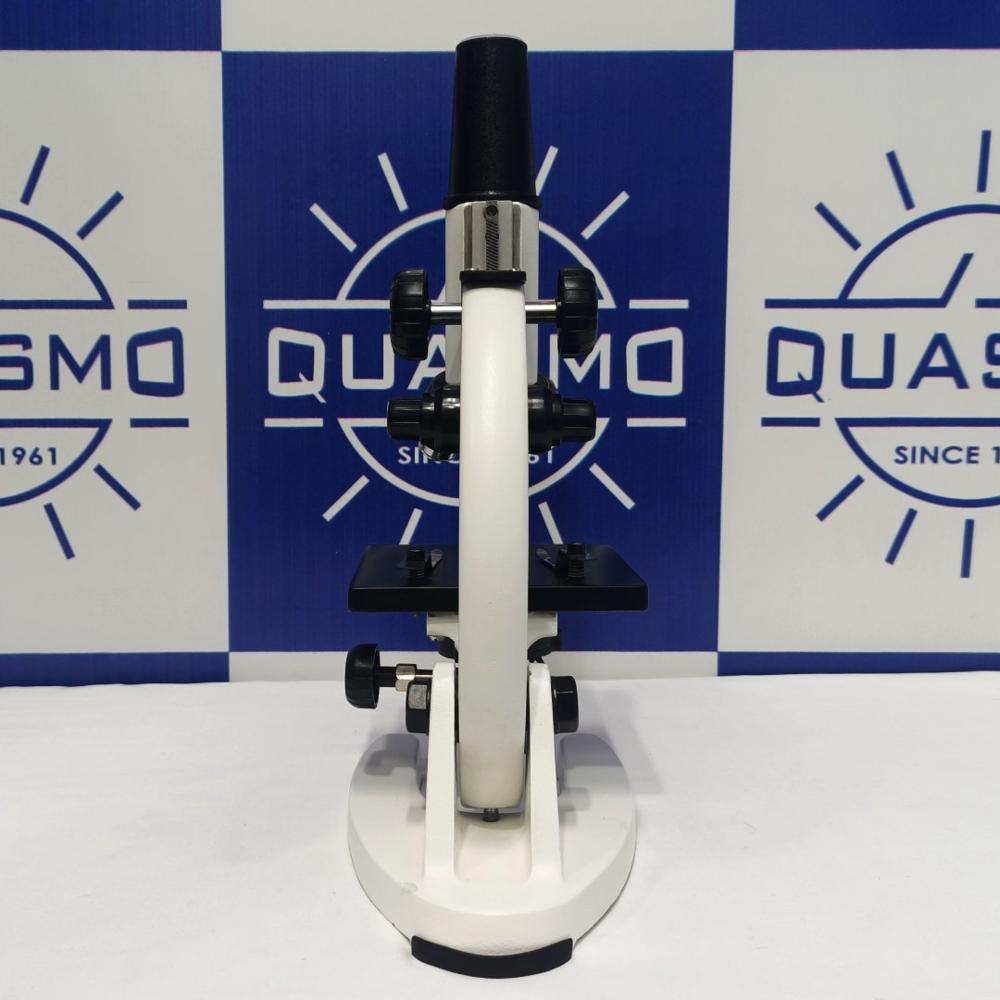
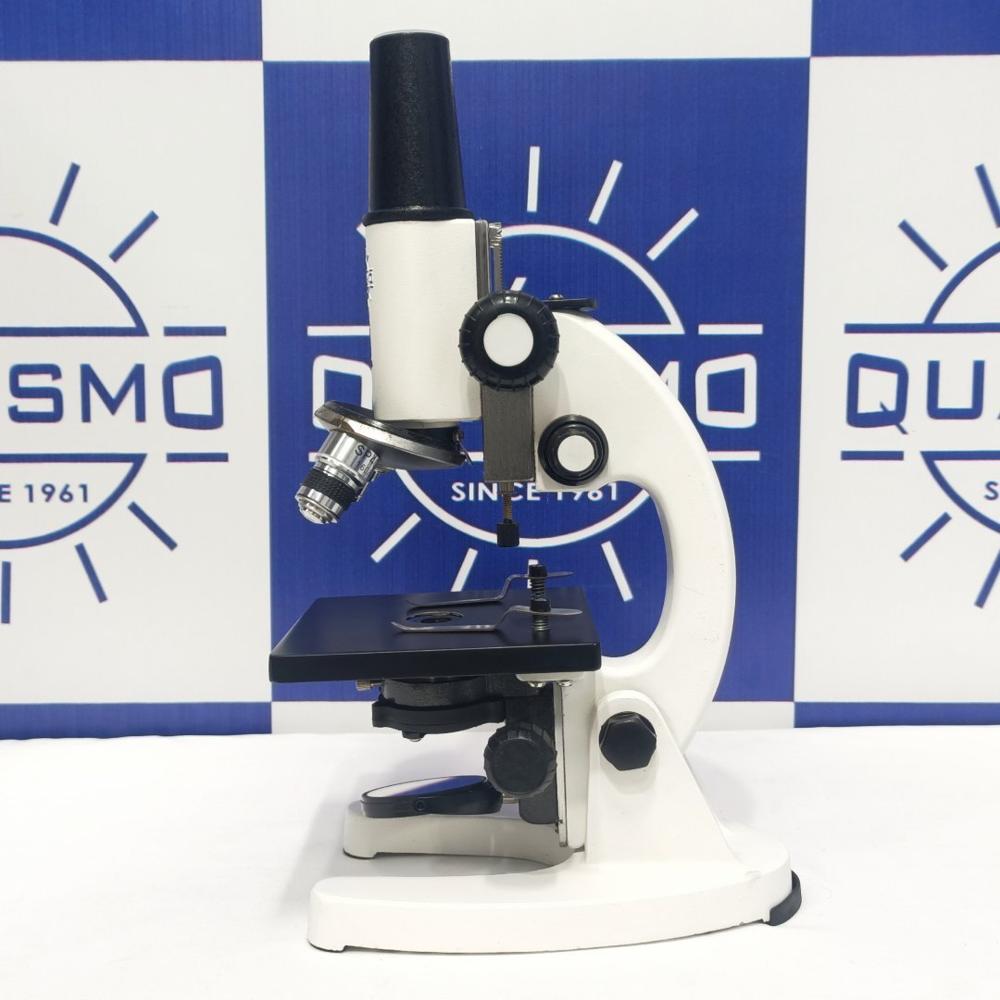
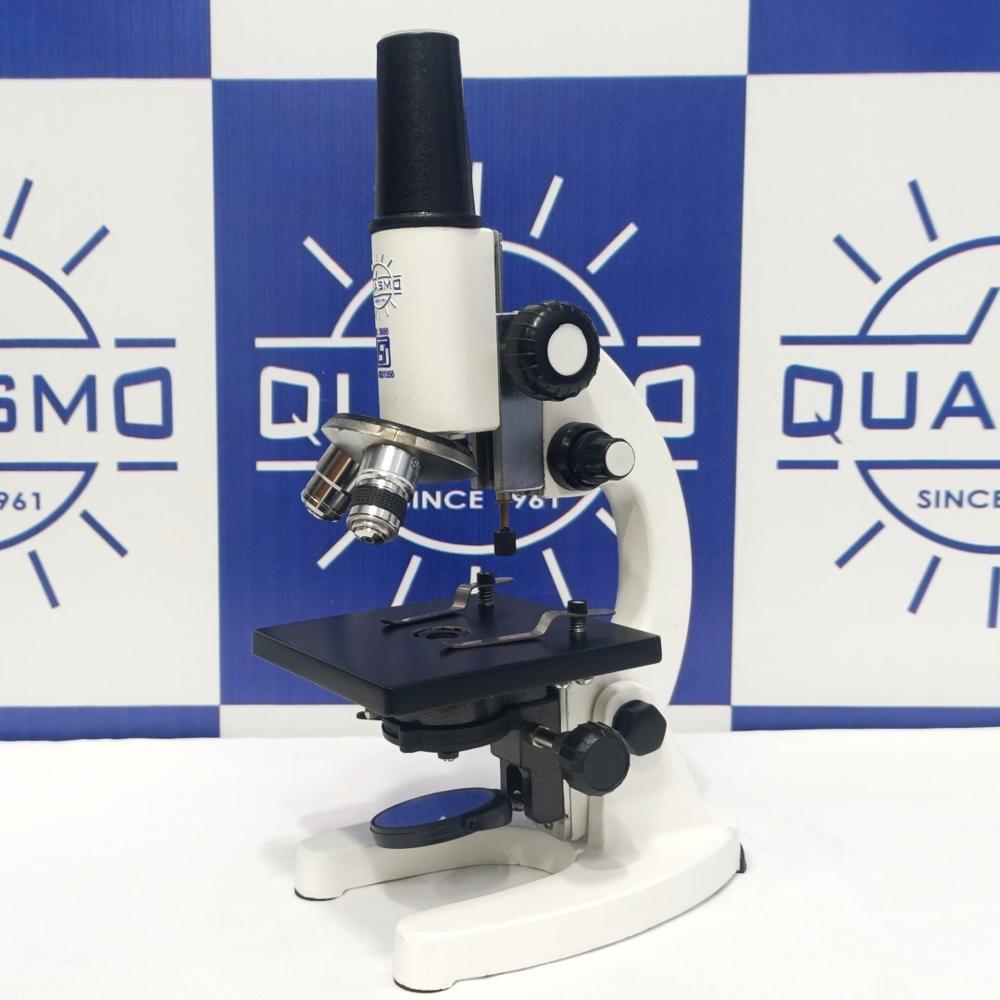
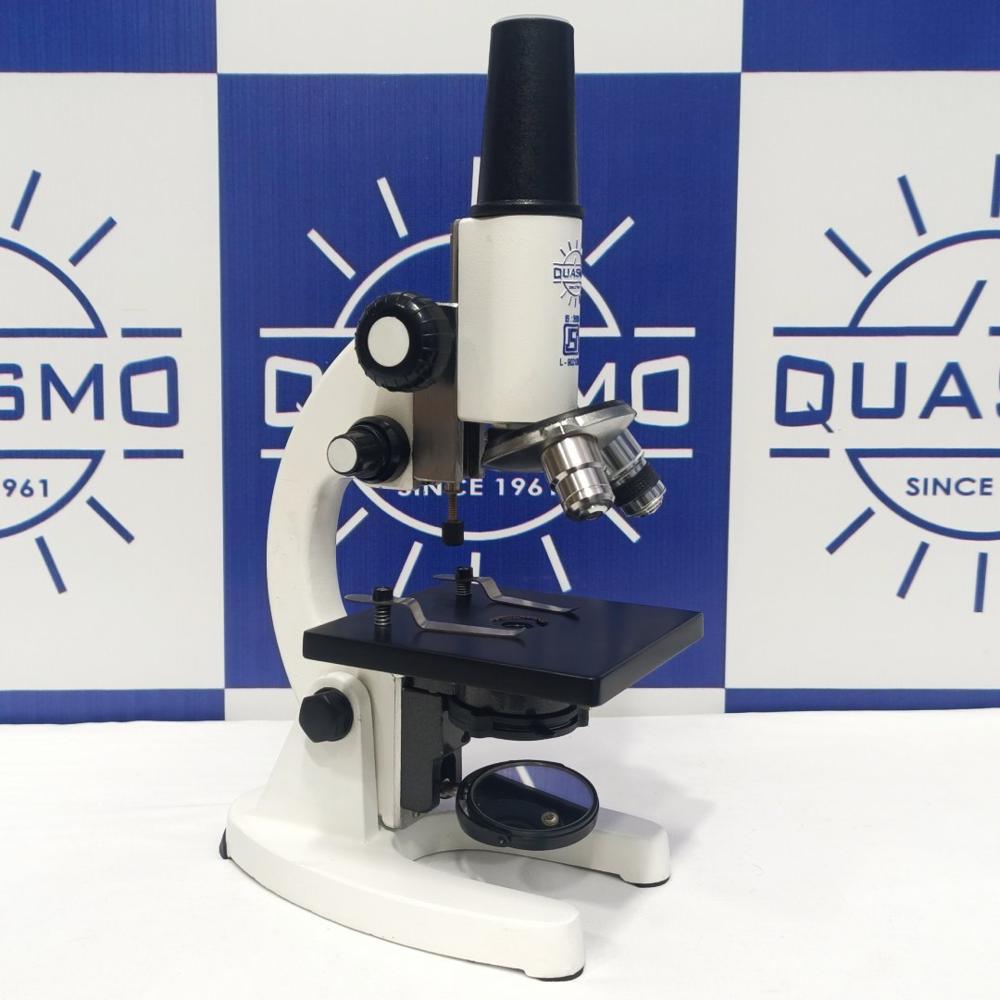
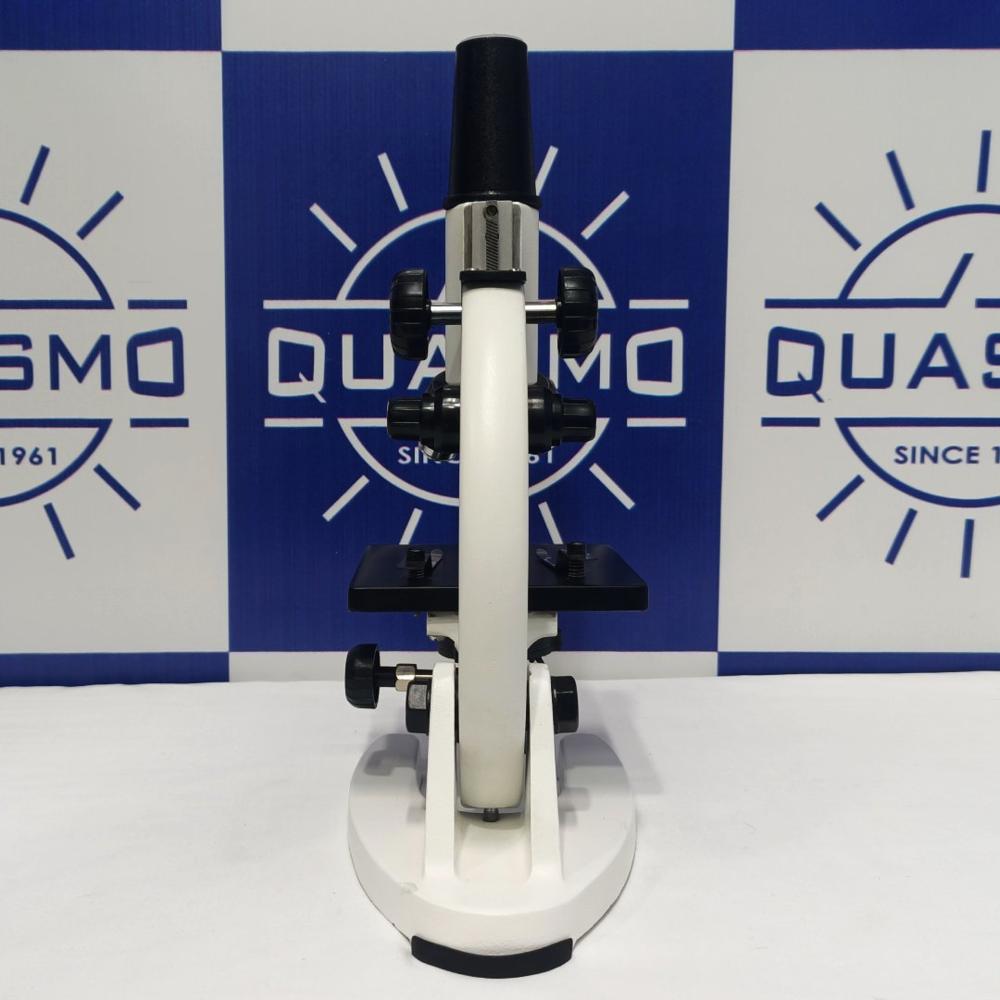
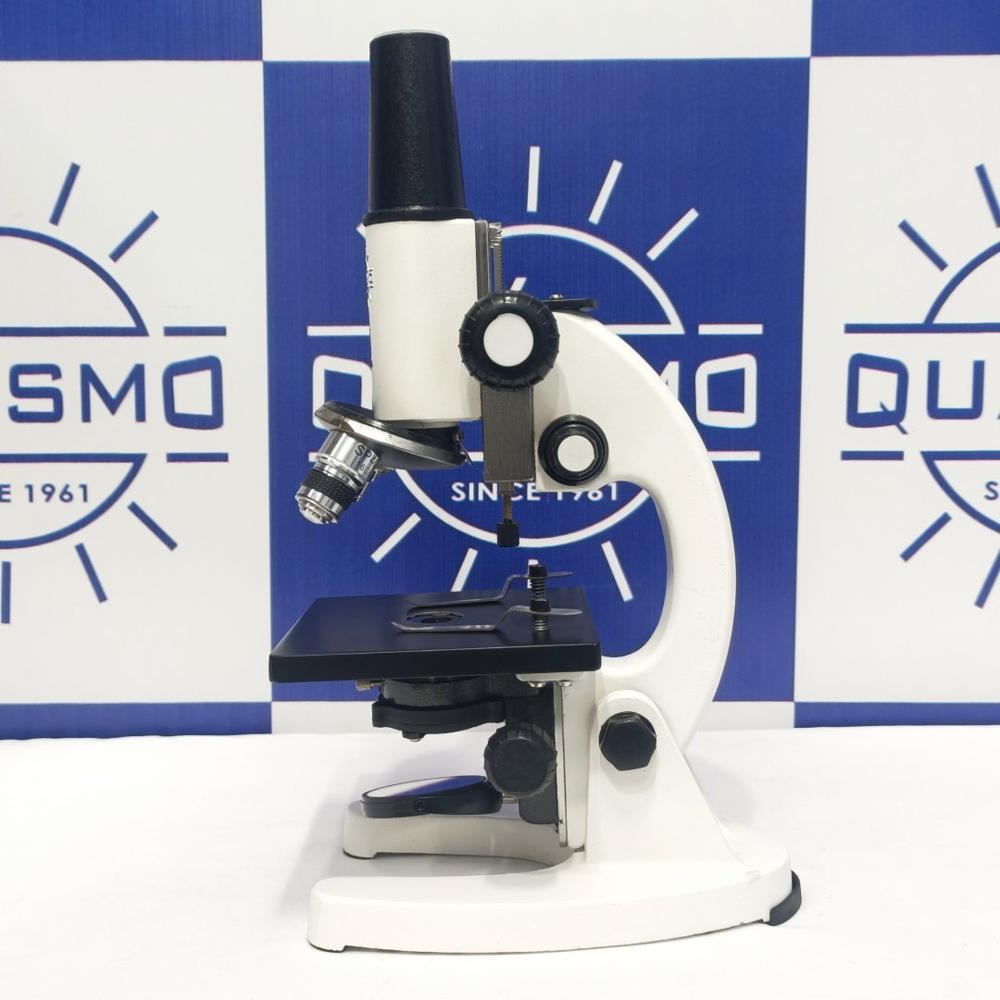
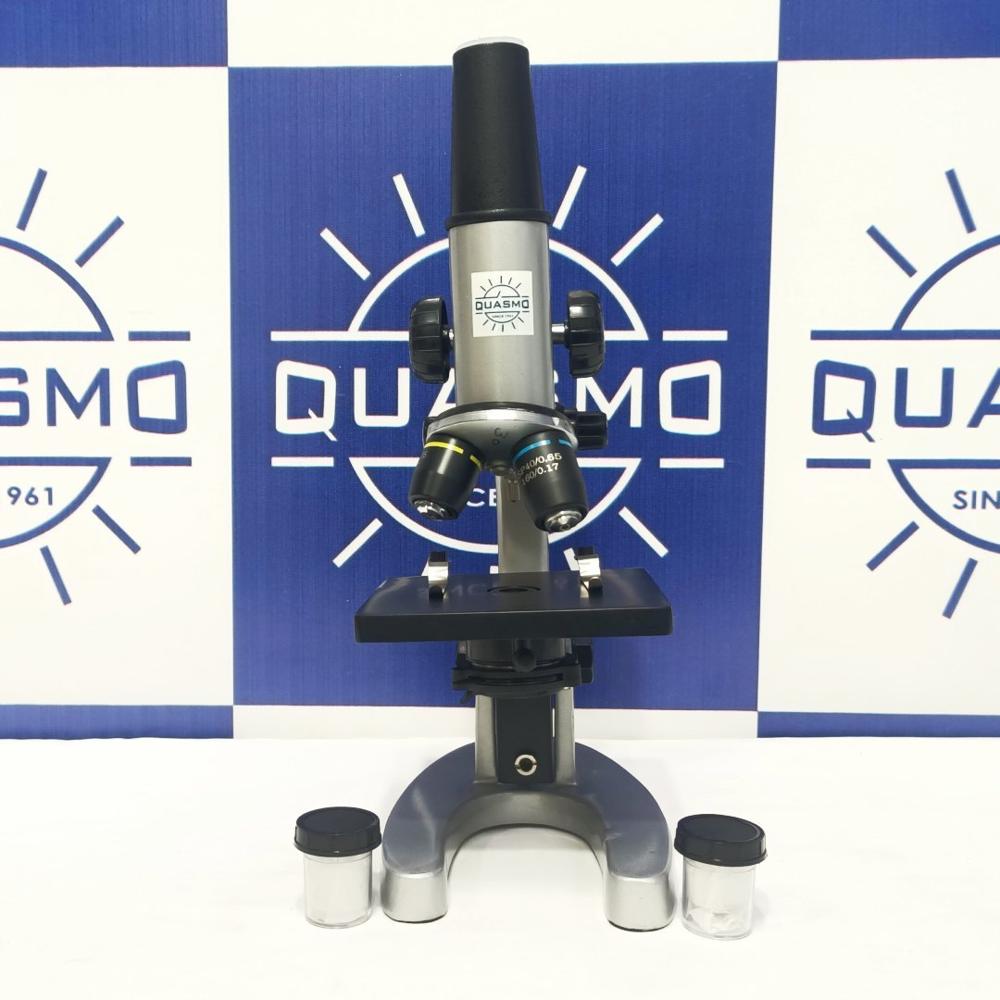
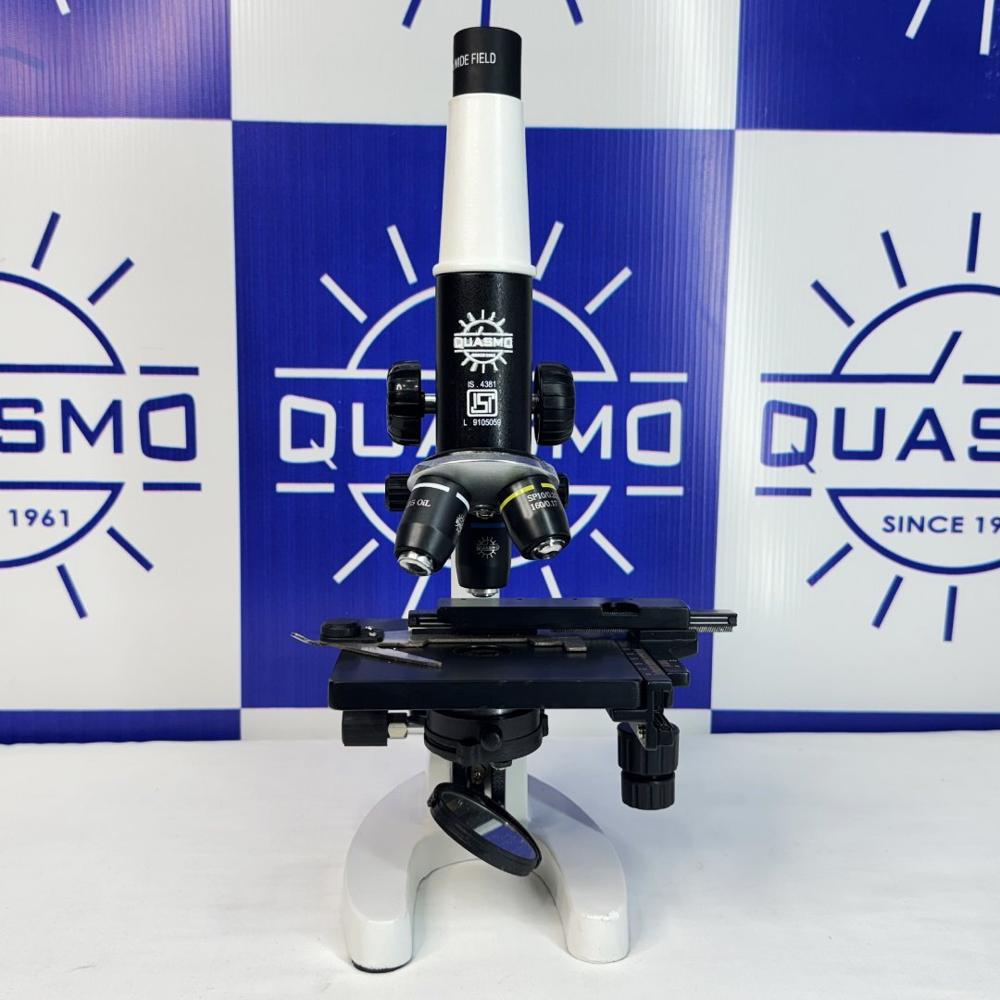
PZ-7 COMPOUND STUDENT MICROSCOPE
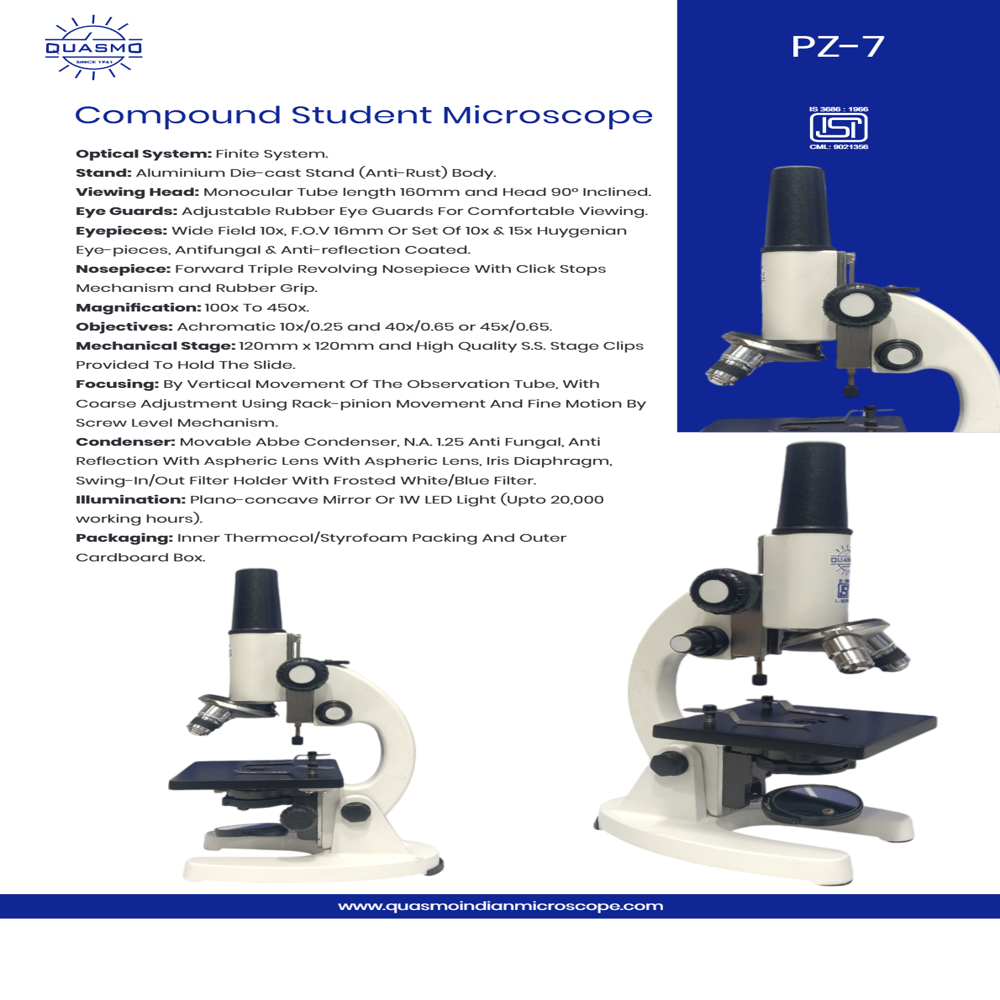
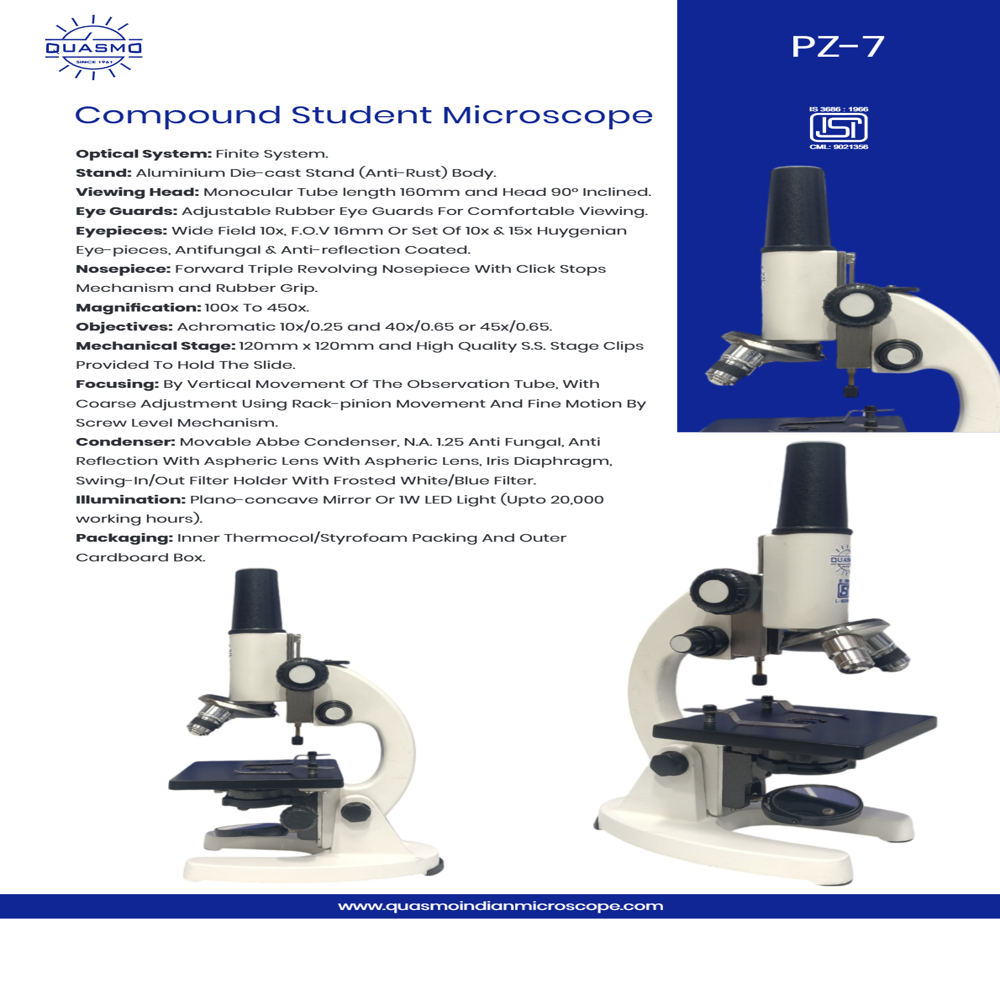
Optical System: Finite System.
Stand: Aluminium Die-cast Stand (Anti-Rust) Body.
Viewing Head: Monocular Tube length 160mm and Head 90 Inclined.
Eye Guards: Adjustable Rubber Eye Guards For Comfortable Viewing.
Eyepieces: Wide Field 10x, F.O.V 16mm Or Set Of 10x & 15x Huygenian Eye-pieces, Antifungal & Anti-reflection Coated.
Nosepiece: Forward Triple Revolving Nosepiece With Click Stops
Mechanism and Rubber Grip.
Magnification: 100x To 450x.
Objectives: Achromatic 10x/0.25 and 40x/0.65 or 45x/0.65.
Mechanical Stage: 120mm x 120mm and High Quality S.S. Stage Clips Provided To Hold The Slide.
Focusing: By Vertical Movement Of The Observation Tube, With
Coarse Adjustment Using Rack-pinion Movement And Fine Motion By
Screw Level Mechanism.
Condenser: Movable Abbe Condenser, N.A. 1.25 Anti Fungal, Anti
Reflection With Aspheric Lens With Aspheric Lens, Iris Diaphragm,
Swing-In/Out Filter Holder With Frosted White/Blue Filter.
Illumination: Plano-concave Mirror Or 1W LED Light (Upto 20,000
working hours).
Packaging: Inner Thermocol/Styrofoam Packing And Outer
Cardboard Box.
Ergonomic Design for Student ComfortThe PZ-7 microscope incorporates a 45 inclined monocular head, making it easy and comfortable to observe samples for extended periods. Its sturdy cast iron frame, rectangular heavy-duty base, and stain-resistant finish ensure long-lasting reliability, even in busy educational settings.
Versatile Optical PerformanceWith three objective lenses (10x, 45x, and 100x oil immersion) and interchangeable wide-field eyepieces (10x, 15x), the PZ-7 delivers magnifications from 100x to 1200x as per configuration. The built-in iris diaphragm and fixed condenser help control light intensity and clarity for various specimen types.
User-Friendly Operation and MaintenanceManual X-Y stage movement, smooth rack-and-pinion focus, and nickel-plated stage clips allow intuitive slide setup and adjustment. The included plano-concave mirror enables illumination with daylight or an optional artificial source. Spare parts like an extra bulb, fuse, and dust cover are supplied for extended usability.
FAQ's of PZ-7 COMPOUND STUDENT MICROSCOPE:
Q: How do I adjust the magnification on the PZ-7 microscope?
A: Change magnification by rotating the triple revolving nosepiece to switch between the three supplied objective lenses (10x, 45x, 100x). Combine with either the 10x or 15x wide-field eyepiece to achieve desired total magnification.
Q: What is the process for illuminating specimens using this microscope?
A: Position the slide on the stage and adjust the built-in plano-concave mirror to reflect daylight or an artificial light onto the specimen. The mirror is adjustable to maximize illumination, while the iris diaphragm enables you to precisely control light intensity.
Q: Where is the PZ-7 best suited for use?
A: This microscope is ideal for school, college, and student laboratory environments, particularly for biology classes and academic experiments. Its rugged build and ease of use make it suitable for both new learners and instructors.
Q: What benefits do the coarse and fine adjustment knobs provide?
A: The coarse adjustment knob allows quick focusing for general observation, while the fine adjustment knob provides precise focusing, essential for high-magnification viewing such as with the 100x oil immersion objective.
Q: How do I maintain and care for the PZ-7 student microscope?
A: Keep the microscope covered with the provided dust cover when not in use. Clean optical surfaces with lens paper and avoid touching them. Spare parts, including an extra bulb and fuse, are provided to facilitate easy maintenance and prolong the instrument's lifespan.
Q: When is oil immersion used with this microscope?
A: Oil immersion is required when using the 100x objective lens for maximum resolution and clarity. Apply a drop of immersion oil between the slide and lens, ensuring careful handling to protect the optics.
Q: What are the advantages of the PZ-7's construction materials?
A: The cast iron frame with corrosion-resistant paint offers exceptional durability, stability, and resistance to wear, making it reliable for frequent classroom or laboratory use.










 Send Inquiry