Product Description
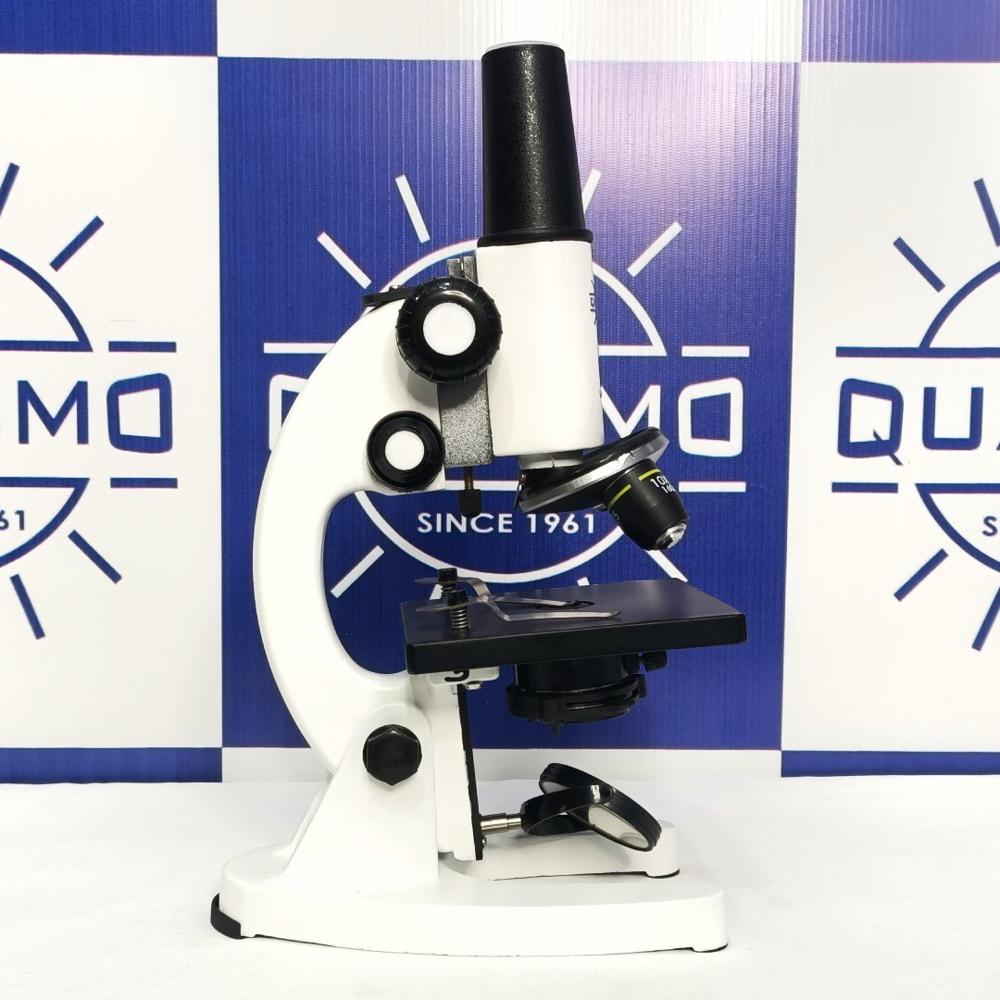
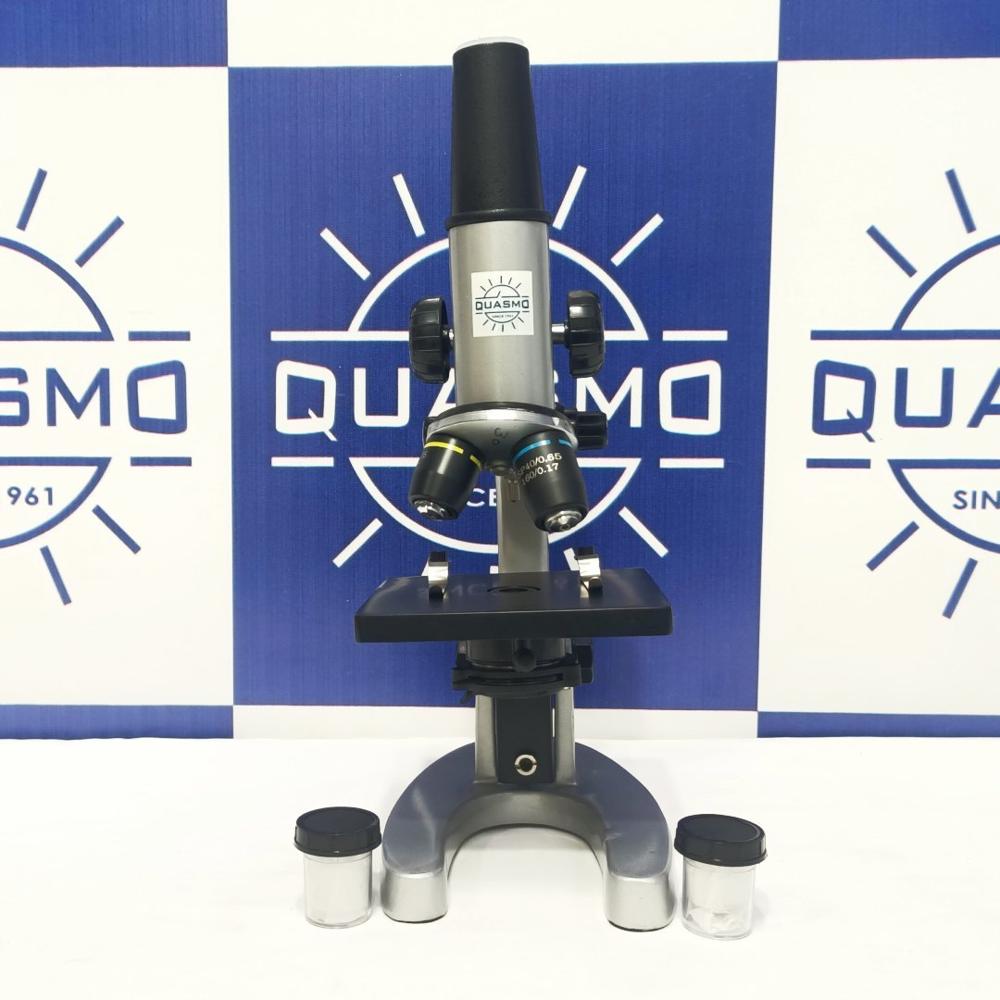
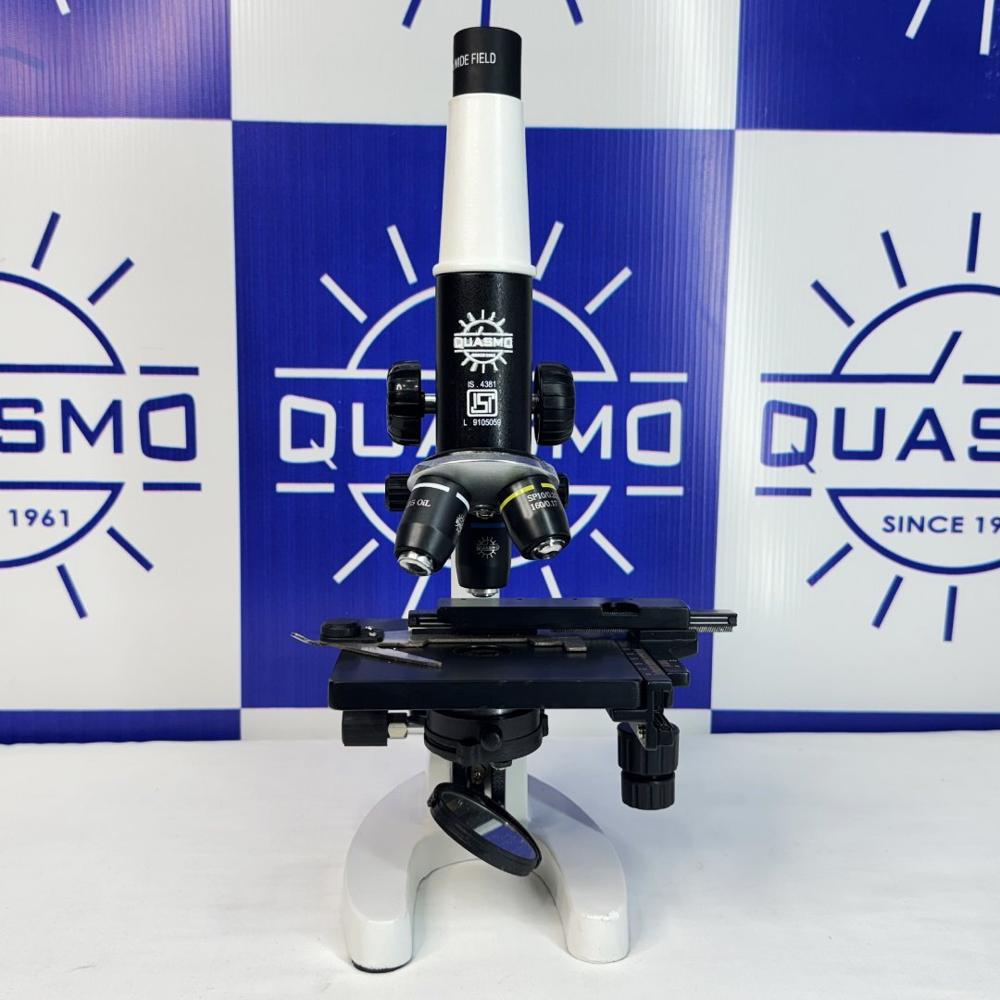
DISSECTING MICROSCOPE
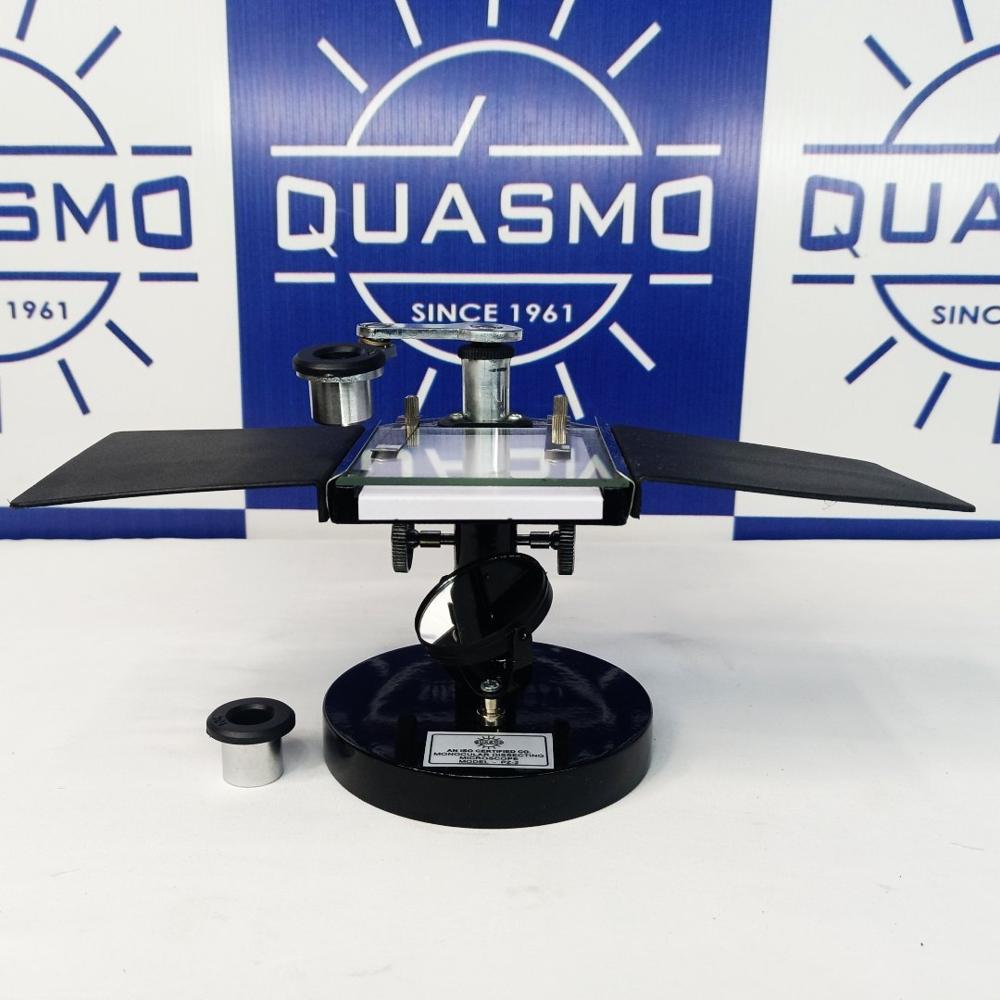
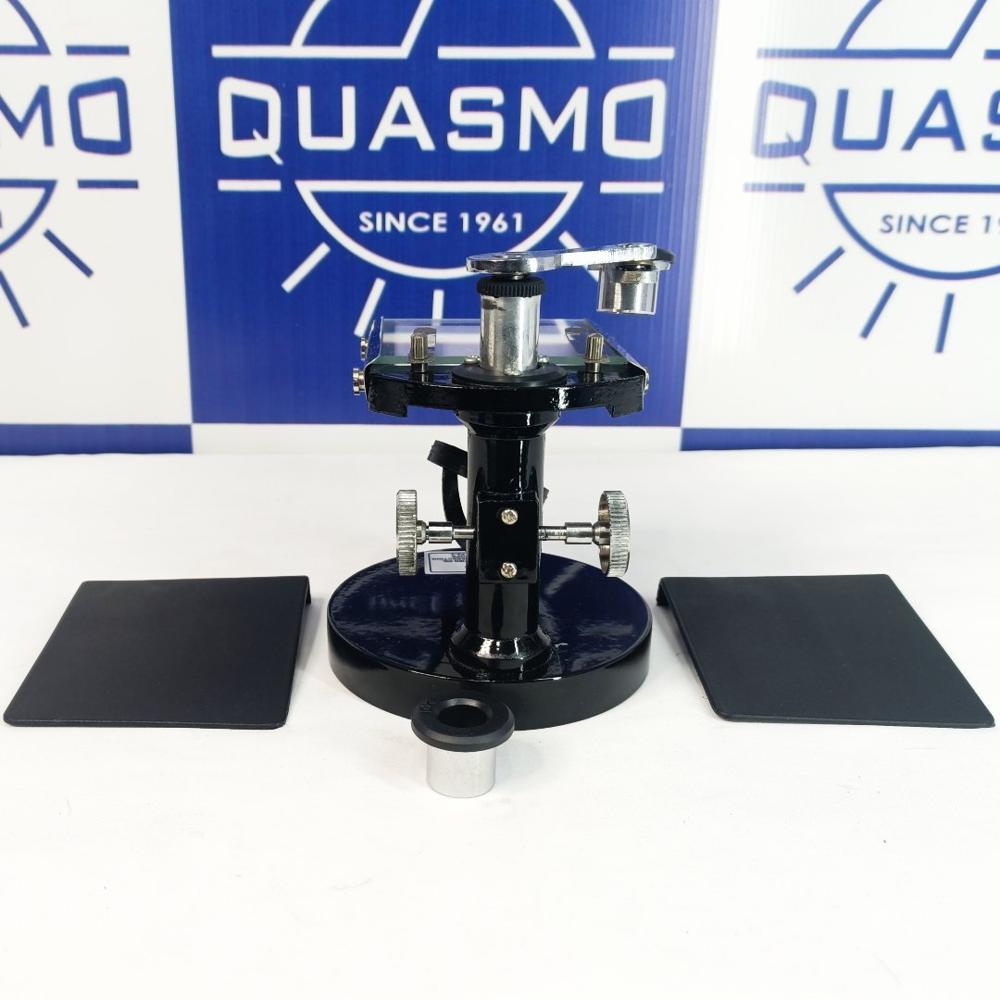
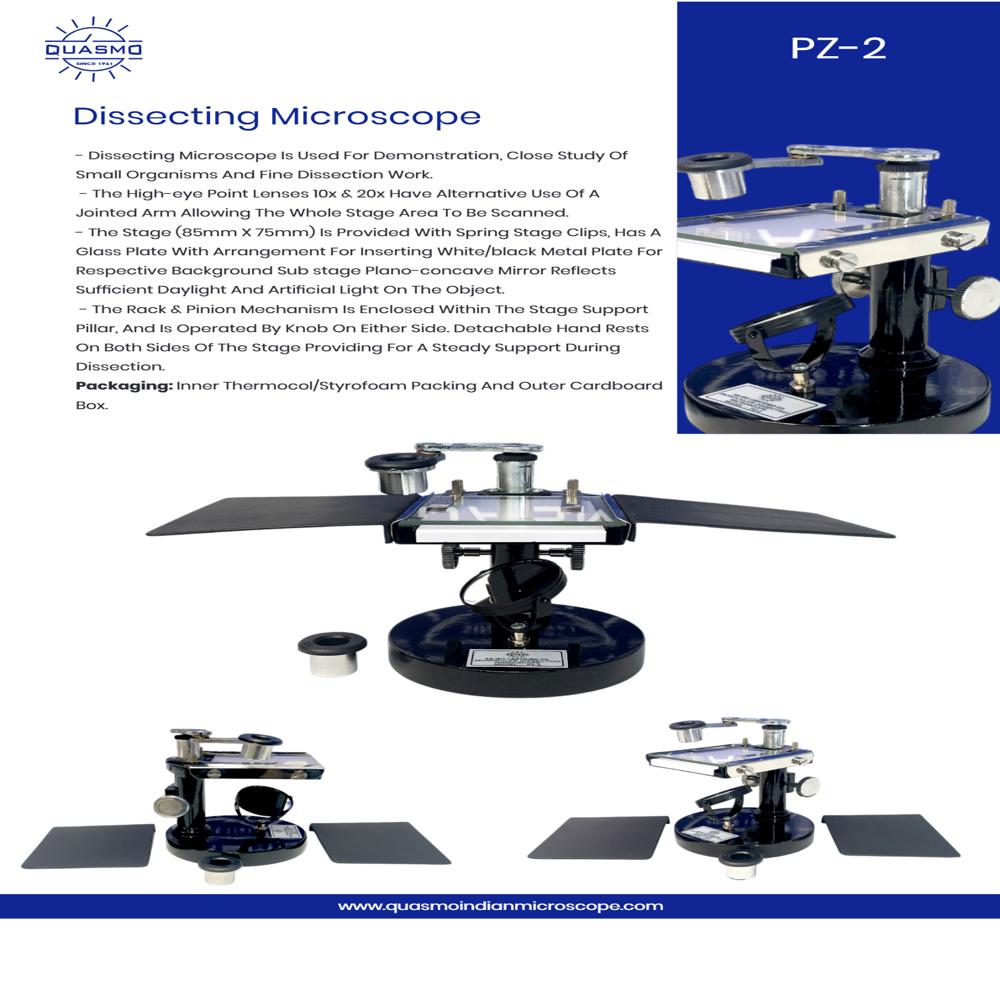
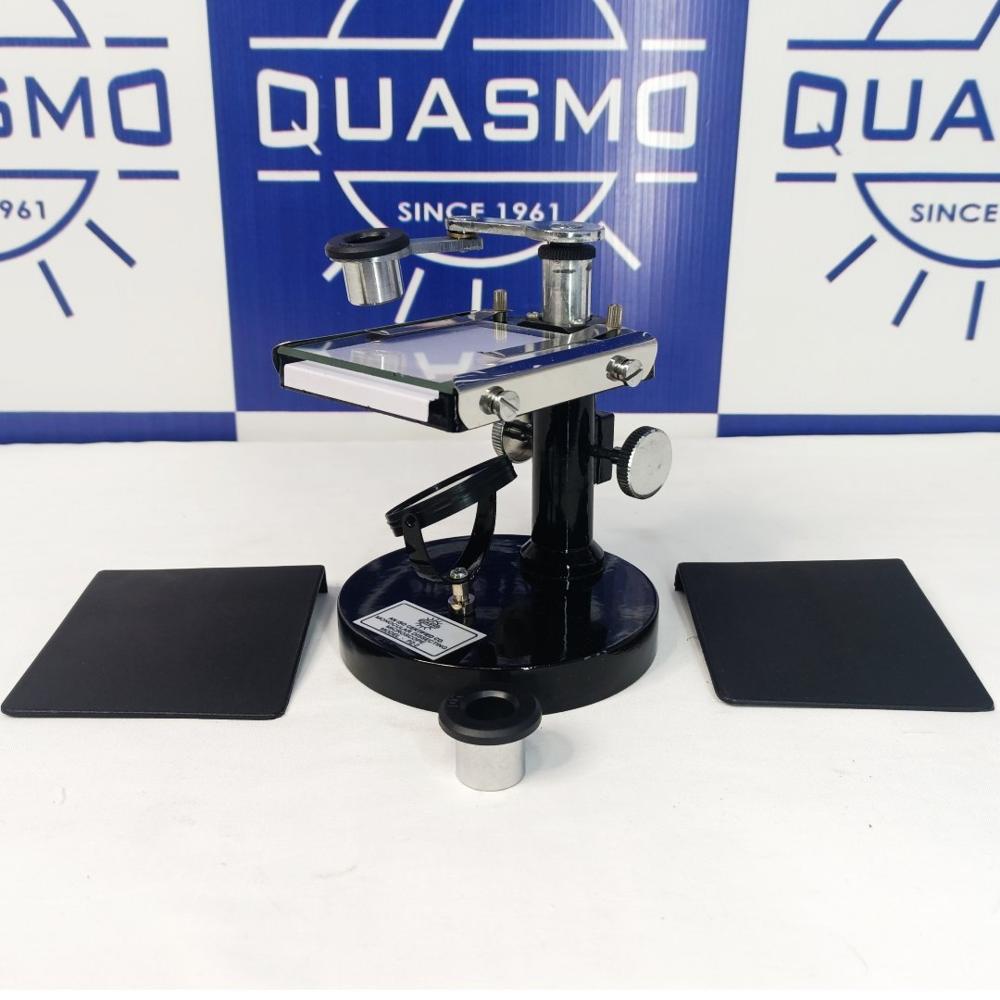
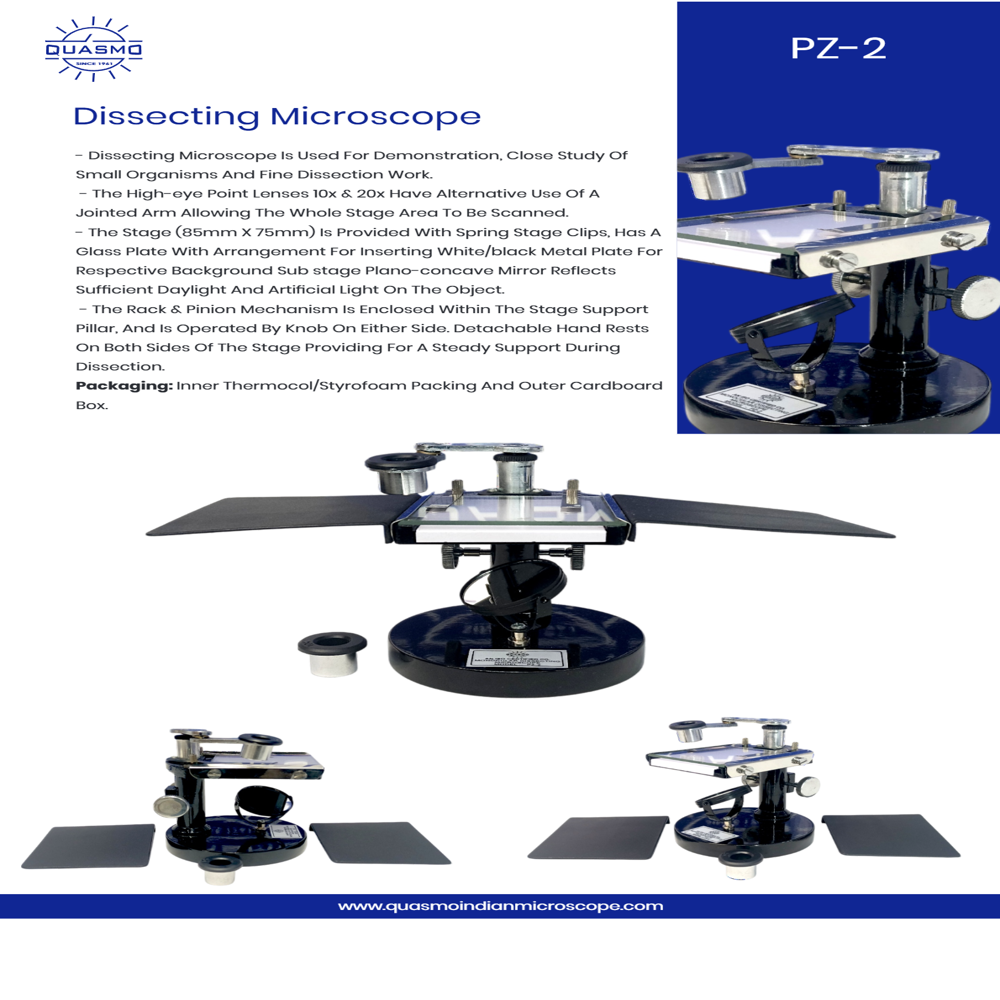
Dissecting Microscope Is Used For Demonstration, Close Study Of
Small Organisms And Fine Dissection Work.
The High-eye Point Lenses 10x & 20x Have Alternative Use Of A
Jointed Arm Allowing The Whole Stage Area To Be Scanned.
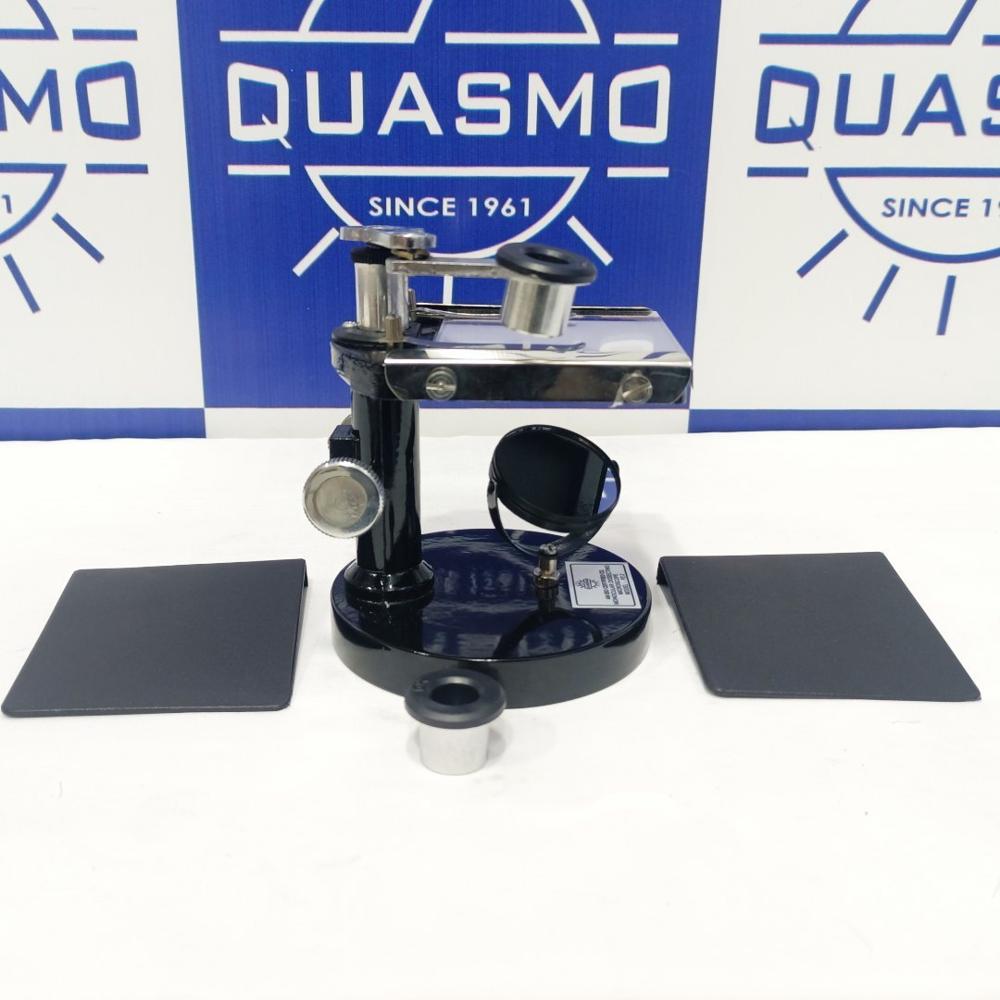
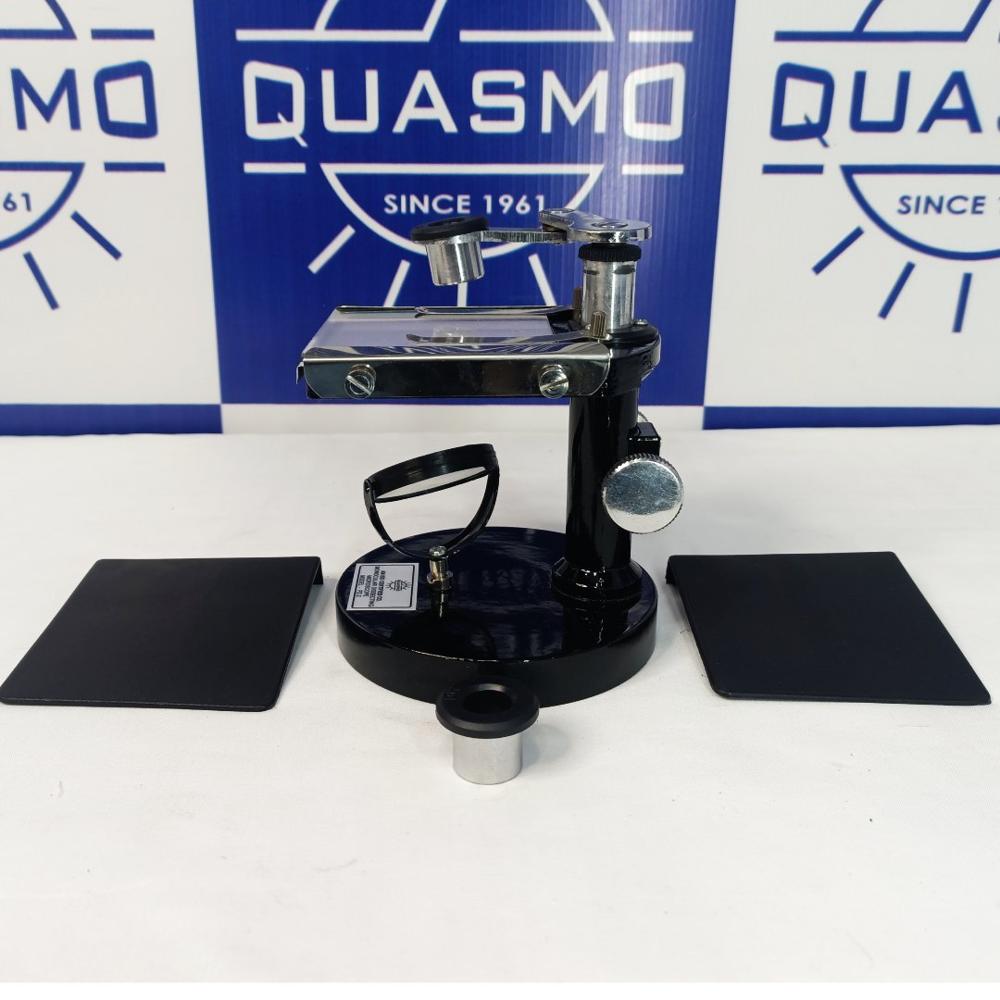
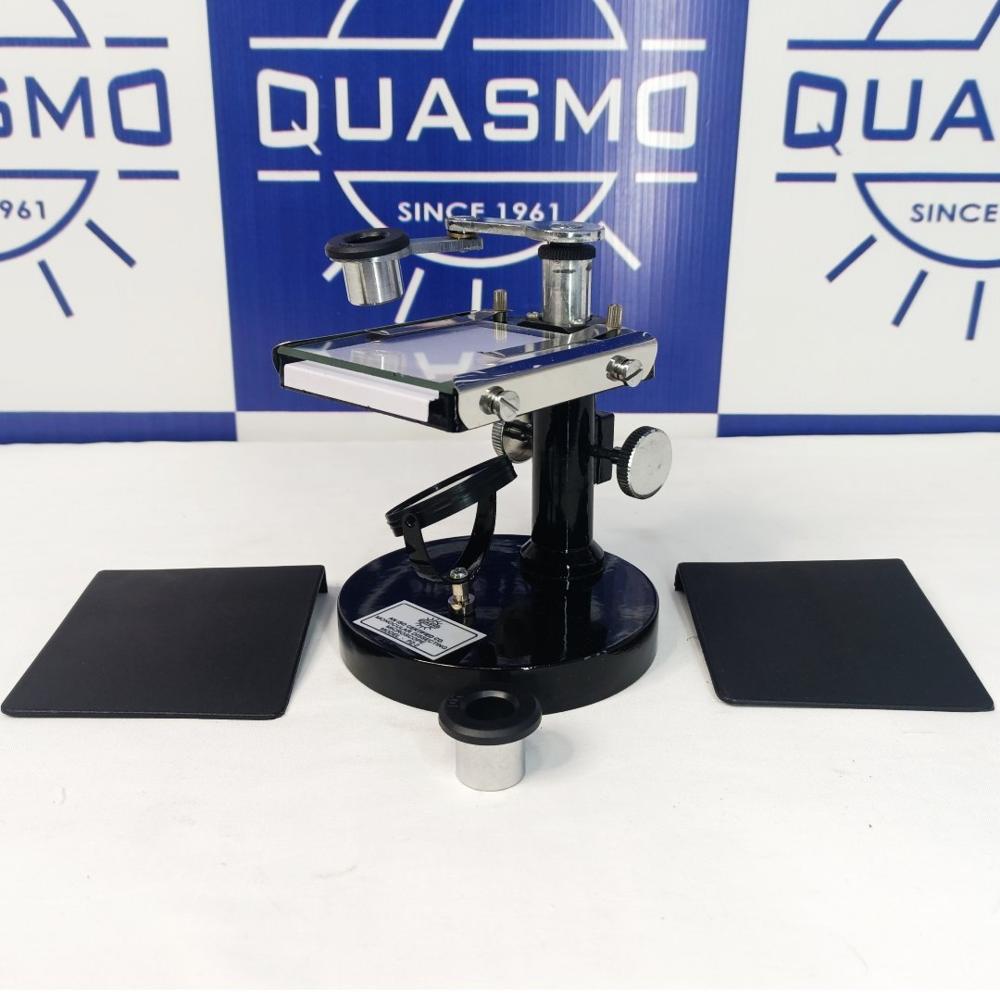
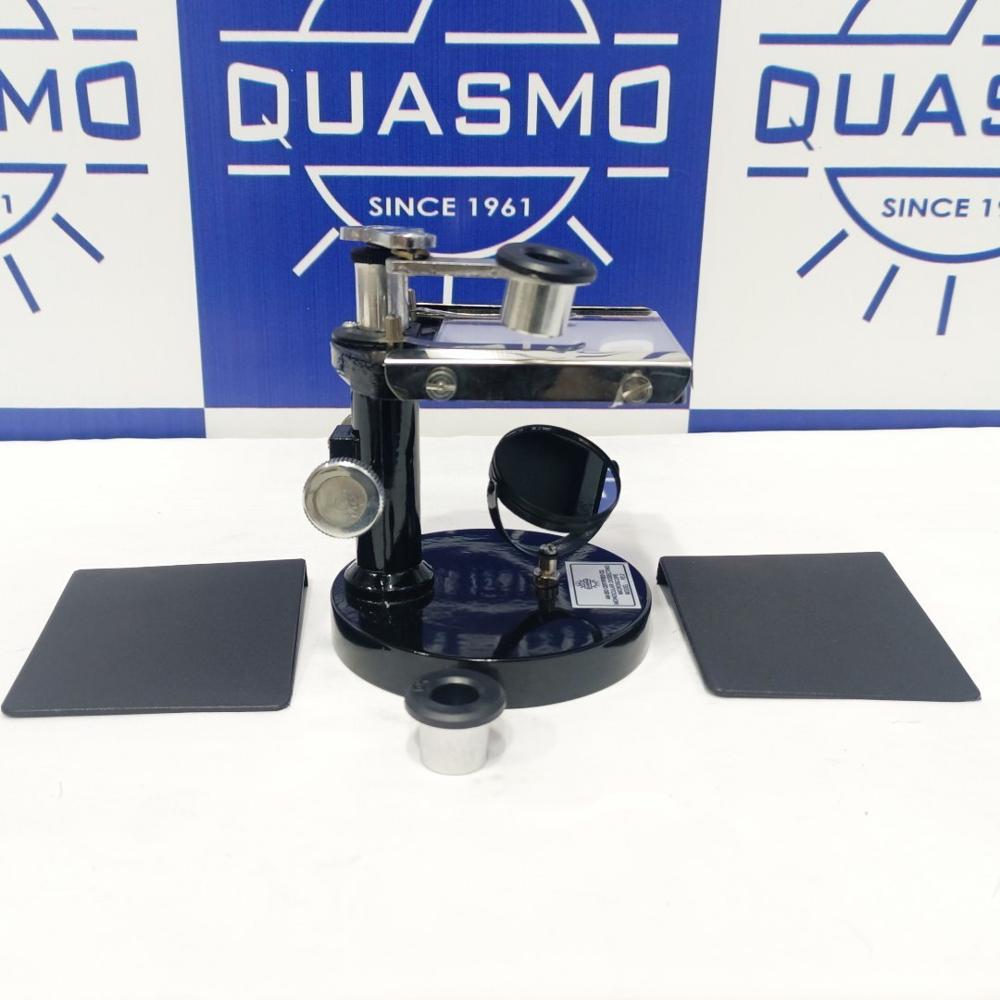
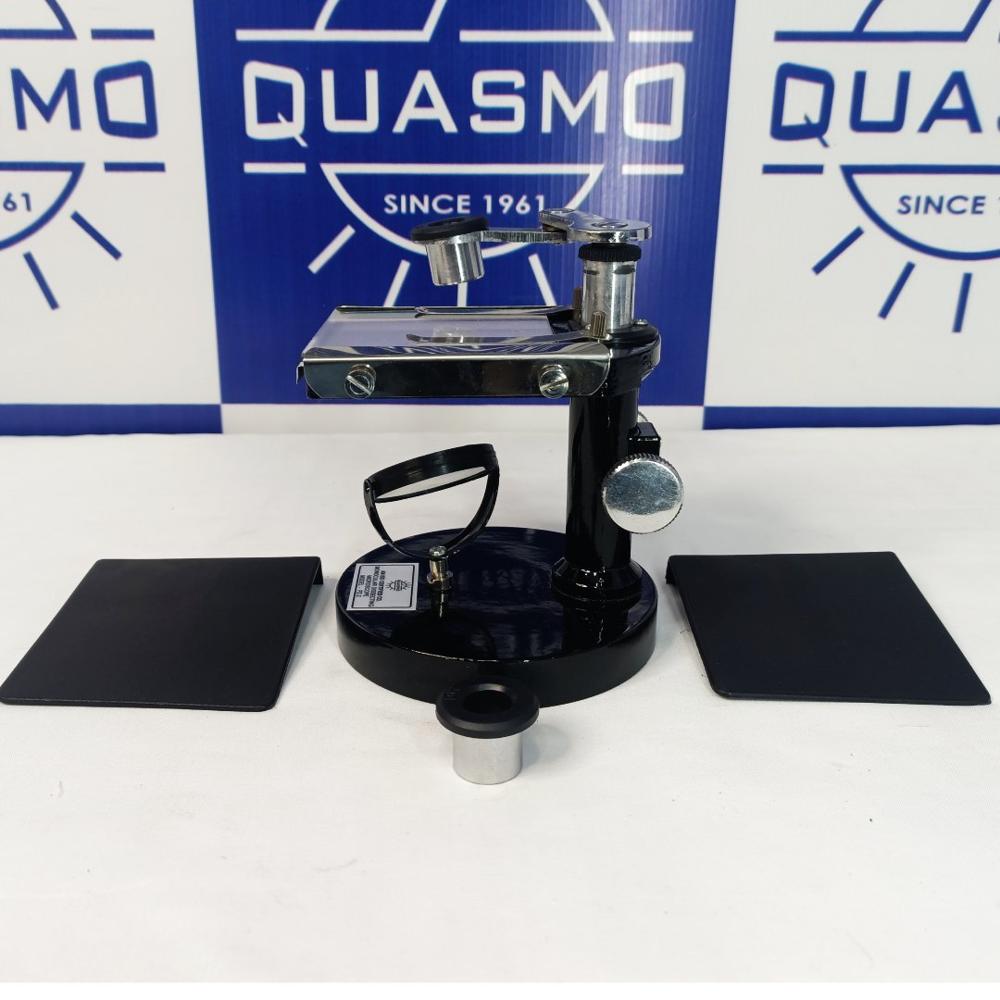
The Stage (85mm X 75mm) Is Provided With Spring Stage Clips, Has A
Glass Plate With Arrangement For Inserting White/black Metal Plate For
Respective Background Sub stage Plano-concave Mirror Reflects
Sufficient Daylight And Artificial Light On The Object.
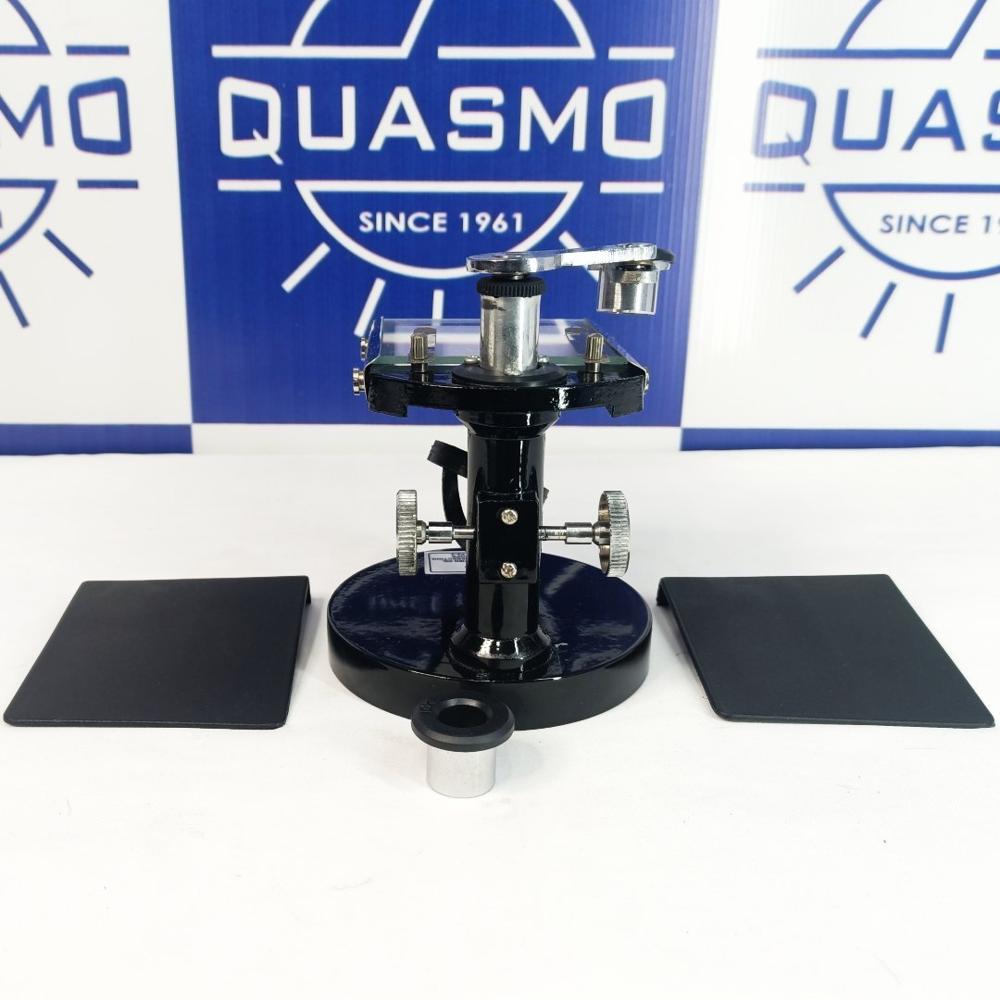
The Rack & Pinion Mechanism Is Enclosed Within The Stage Support
Pillar, And Is Operated By Knob On Either Side. Detachable Hand Rests
On Both Sides Of The Stage Providing For A Steady Support During
Dissection.
Packaging: InnerThermocol/Styrofoam Packing And Outer Cardboard
Box.
Precision and Stability for Detailed ObservationsDesigned with a sturdy metallic body and a stable heavy base, the PZ-2 Dissecting Microscope provides unmatched steadiness, reducing vibrations for precise specimen examination. Its anti-skid feet further ensure that the instrument remains securely positioned on any laboratory surface, making it an excellent choice for academic environments where reliability is paramount.
Flexible Magnification for Comprehensive StudyThis microscope offers variable magnification from 10x to 40x, made possible through interchangeable achromatic objectives and paired eyepieces. Such flexibility allows students and educators to examine specimens at different levels of detail, supporting a wide variety of biological studies. The intuitive rack and pinion focus adjustment enhances the user experience, particularly for hands-on learning.
User-Friendly and Built for EducationWith features like a wide stage for convenience, anti-fungal optics, and minimal maintenance requirements, the PZ-2 is ideal for elementary through college-level learning. It comes complete with essential accessories and is designed for straightforward operation, making it easily accessible for both new and experienced users in classroom and laboratory settings.
FAQ's of PZ-2 Dissecting Microscope:
Q: How does the PZ-2 Dissecting Microscope facilitate specimen observation?
A: The microscope utilizes a straight monocular view head and a square stage with stage clips, enabling stable and clear examination of specimens. Its coarse focus adjustment ensures precise but straightforward focusing for users at varying skill levels.
Q: What magnification options are available and how are they achieved?
A: Magnification ranges from 10x to 40x, accomplished by using interchangeable paired eyepieces (10x and 15x) along with achromatic objectives (2x or 4x). These combinations provide versatility for observing different specimen details.
Q: When is this microscope most effectively used?
A: The PZ-2 is best used in educational environments, particularly within elementary, high school, and college biology classrooms or labs, for studying biological specimens at low magnification.
Q: Where is the microscope best placed for optimal performance?
A: It should be set on a stable, flat laboratory table or desk. The heavy base and anti-skid feet ensure the microscope stays firmly in place during use, even when adjusting focus or stage position.
Q: What is the process for focusing and illuminating specimens?
A: Focusing is done manually via a rack and pinion coarse adjustment, which moves the stage up or down. Illumination comes from a wide plano-concave mirror that reflects ambient light onto the specimen, and an optional substage illuminator can be used if needed.
Q: How can the microscope be maintained for long-lasting use?
A: Regularly use the provided cleaning cloth to wipe lenses, store the unit under the dust cover when not in use, and replace spare parts such as bulbs, mirrors, or stage glass as needed. Ensure the environment is dry to preserve the anti-fungal optics.
Q: What are the main benefits of using the PZ-2 Dissecting Microscope in academic settings?
A: Its rugged design, stable operation, flexible magnification, and ease of use make it ideal for fostering hands-on learning and supporting detailed biological study at multiple educational levels.










 Send Inquiry